Tailored Proteins, Healthy Gut
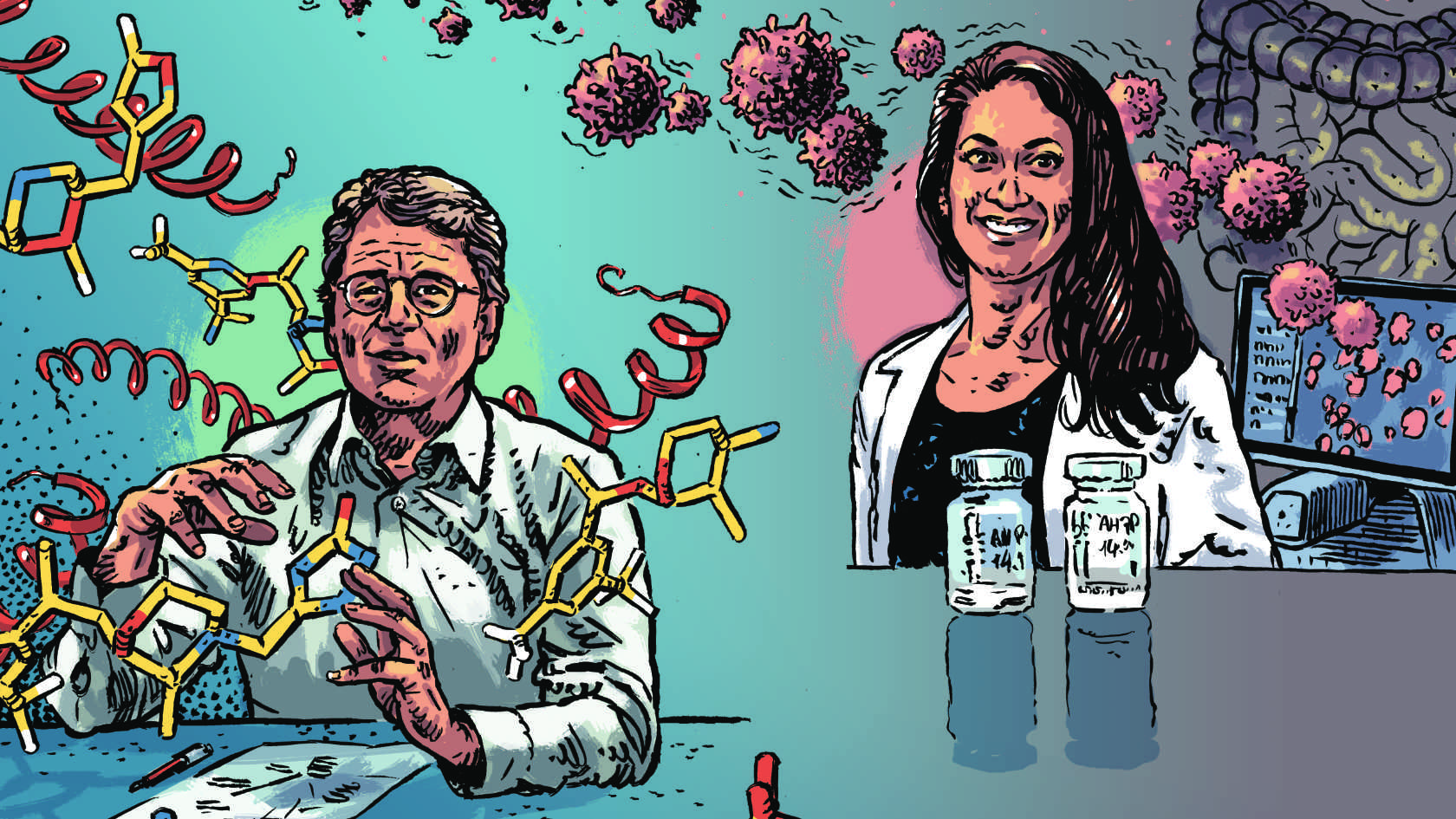
Ana Montalban-Arques had been working as a postdoctoral researcher at University Hospital Zurich for a year and a half when her research began to yield promising results. She was exploring link between colorectal cancer and the microbiome, the collection of bacteria that lives in our gut.
She found that the microbiome of people who develop colorectal cancer has a different composition because they lack certain types of bacteria. This raised a new question: could this knowledge be used to develop a therapy that restores these missing bacteria to people with the disease?
Professor or CEO?
Montalban-Arques’ professor then asked her: “Could you see yourself setting up and running a company to turn this new knowledge into a therapy?” The young researcher’s first reaction was one of hesitation. At 33, Montalban-Arques had never considered taking such a step.
After giving it some thought and speaking to a number of people, including her partner, who worked in the same research group, she agreed. One of the factors that persuaded her was the argument that the roles of professor and CEO are not all that different: “Both are mainly about leading a team and managing finances,” she says.
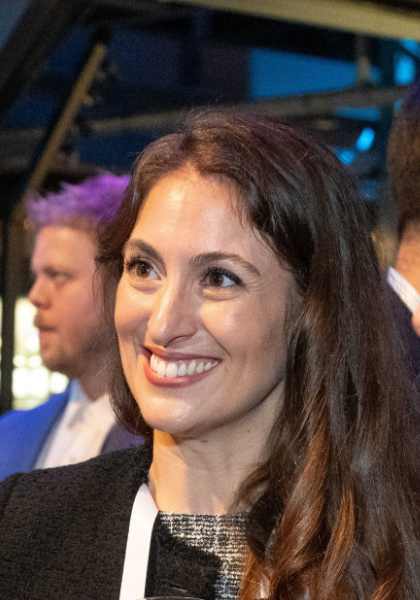
Founding a spin-off means learning to deal with the unknown and an open-ended future – including the risk of failure.
Even so, academia and the world of spin-offs are very different. From 2020 onward, Ana Montalban-Arques gradually began immersing herself in the business world, which was entirely new to her. She had a clear objective: to found a company that would develop a novel immunotherapy for cancer based on the microbiome in the gut.
Spin-offs: Protein engineering and immunotherapy
Andreas Plückthun has been involved in founding four spin-off companies. The spin-offs MorphoSys (founded in 1992, acquired by Novartis in 2025), Molecular Partners (2004, now listed on the stock exchange), G7 Therapeutics (2014, now part of Nxera) and Vector Biopharma (2021) are all based on his research into targeted modification and new development of proteins – such as antibodies (protein engineering).
The spin-off Adularia (2022) run by CEO Ana Montalban-Arques is based on the finding from her research that patients with colorectal cancer lack certain bacteria in the microbiome in their gut. The idea is that metabolites of these bacteria should be utilized as artificially produced, optimized small molecules as an immunotherapy to treat cancer.
Her journey to setting up the spin-off Recolony began when she successfully applied for an Entrepreneur Fellowship at UZH. The program provides members of the University of Zurich with training, networking opportunities and funding to help them develop a business model for a planned spin-off.
Further support from the Swiss National Science Foundation, the Swiss Innovation Agency Innosuisse and the Wyss Zurich Translational Center gave her even more confidence that she and the three-person founding team from University Hospital Zurich were right on track.
A good idea is not enough
In the early stages, Montalban-Arques carried on working as a researcher. But once the spin-off was founded in 2022, she focused entirely on her role as CEO. She didn’t find it hard to let go of the research: “It was the next logical step to make sure our valuable findings didn’t simply gather dust in a drawer, but were instead used to develop an effective therapy,” she says.
But she’s adamant that a good idea alone is not enough to create a spin-off. You also need to ask yourself whether it solves a real problem, whether there’s a market for it and whether the idea can be patented.
But above all, founding a spin-off means learning to deal with the unknown and an open-ended future – including the risk of failure, says Montalban-Arques. Experience has helped her grow into the role: “When you set up a company, you’re on a dark, unfamiliar path that gradually lights up in front of you with each step you take. You grow into the role.”
Once you decided to become an entrepreneur, she says, lots of doors start to open, for example through networking opportunities and other forms of support. It was also helpful for her to know: “I’m not the only one, many others have pursued this path before me and are still doing so today – especially young women.”
Clear division of responsibilities
In the period since she founded the company, Montalban-Arques, now 39, has become a mother of two. “You can definitely combine the two roles,” she says. Although she and her partner, who is also one of the founders, actively make sure this is the case. Their rule is that when it comes to business, the pair speak English.
But time at home is very much reserved for private matters – this is when the native Spaniard and her Swiss partner speak Spanish and Swiss German. “Separating our life in this way has worked out really well,” she says. A clear division of responsibilities in the team, which now comprises eight people, is also important for maintaining a good work-life balance.
She has another piece of advice for other spin-offs: “You need to stay flexible.” For example, Recolony started out by looking for the ideal mix of bacteria for treatment. But investors and other stakeholders kept asking: how exactly do the bacteria act against cancer? “If instead of living bacteria you could only utilize the substance from the bacteria that is responsible for the effect, this would be easier to produce and approve. We kept hearing this,” says Montalban-Arques.
The team did indeed manage to identify the relevant metabolite of the bacteria. That’s why in spring 2025, the active ingredient production was reorganized and the name of the spin-off was changed to Adularia. The hope now is that results from an initial clinical trial will be available by 2030. To enable the company to keep pursuing this path, Montalban-Arques now spends most of her time overseeing the first round of funding from private investors.
Innovation Hub and business angels
Scientists from UZH have so far set up around 170 companies. A range of initiatives are available to support members of UZH who want to pursue this path. These include courses and fellowships offered by the Innovation Hub and advice from the technology transfer organization Unitectra, for example on patents.
Outside the university, a number of other organizations can provide support to help people set up a company – ranging from competitions such as Venture Kick and funding agencies like Innosuisse to networks of business angels and venture capital investors.
All these initiatives have emerged only in recent decades. “None of this existed back then,” recalls Andreas Plückthun. The UZH biochemistry professor is one of the pioneers of protein engineering. Over many years, his research has repeatedly led to discoveries that have enabled proteins and antibodies to be used in therapies for specific diseases.
Plückthun has already pursued the path from research to creating a spin-off on four occasions. When he first became involved in setting up a spin-off back in 1992, he was still working as a researcher in Germany: “At the time, establishing companies from universities was still completely unheard of in Europe.”
Plückthun had seen examples of this in the US, where he had previously done research. So it was simply a case of learning by doing, especially as there was no formal support available. The team of three founding members spoke to people in the US and from the pharmaceutical industry and gradually acquired the knowledge they needed from other experts in business and law.
A great deal of persuasion
The team initially tried offering its research findings to pharmaceutical companies directly or recruiting them as investors, but this didn’t work. “The risk-averse companies told us to come back once we were 90 percent of the way to producing a therapeutic drug,” recalls Plückthun. Nobody believed that the three young scientists could succeed.

Once you’ve established a successful company, you have a track record that opens doors.
So the biggest challenge right from the outset was finding private investors, given that there were no other possible ways of securing funding. “It took a great deal of persuasion,” reflects Plückthun. But it worked: his first spin-off MorphoSys is one of the pioneers of antibody production. The spin-off has developed and marketed therapeutic antibodies for a range of diseases, was listed on the stock exchange and was acquired by a pharmaceutical company in 2025.
With the subsequent spin-offs that Plückthun helped found at UZH in 2004, 2014 and 2021, things became easier for two reasons. First, the broader environment had changed: spin-offs had become more common, skepticism had declined and investors were more willing to take risks. Second, he benefited from his experience: “Once you’ve established a successful company, you have a track record that opens doors. We now had investors actually contacting us to ask if they could invest, and we were able to set up more companies that were highly successful.”
Getting the timing right
Today, Plückthun is once again seeing investors become more cautious. “This is very much caused by factors that are beyond our control, such as interest rates in the US,” he says. Whereas securing funding for the first three companies worked well, it then became more difficult with the fourth and it had to be disbanded for the time being. “But the patents have been secured. As soon as we find funding, we can restart,” he says.
“The most important thing when you set up a company is to have a team of like-minded people with skills that complement each other from day one,” says Andreas Plückthun. For instance, he was always the person who initiated the research in his lab and oversaw its further development. Other members of the founding teams were more focused on the numbers and finances, or they had strong communication skills and developed business relationships.
And how can you tell when it’s the right time to found a spin-off? “From the point of view of investors, we were always too early. They were still keen to see more of the doubts dispelled and see more research results showing that our idea does actually work,” says Plückthun.
In practice, however, this process of de-risking often only takes place during the phase when the company has already been founded. He is clear that, if you have the right team and an idea that you are convinced can lead the way in the market, you shouldn’t wait too long: “You have to seize the opportunity. Otherwise, the right people may start to drift away or the competition may get there first.”
The importance of basic research
Now 70, Plückthun has retired from official roles such as serving on the boards of his spin-offs. One reason he never became a CEO himself was that he wanted to continue doing research at the university. “The university is the place where you can try bold things. Revolutionary innovations emerge from free basic research,” believes Plückthun.
“Our research into antibodies had nothing to do with medicine at first, but was linked to understanding these proteins – yet this was crucial in helping the spin-offs to go on to be successful.” Even so, the idea of using any new knowledge as the basis for founding a company is always on his mind: “I’ve got another concrete plan for a spin-off,” he says.
While Plückthun remained in research, Montalban-Arques has fully embraced her role as a CEO. UZH guidelines do not allow the two roles to be combined. Company founders who remain employed at UZH may serve on the board of their spin-off or act as advisers, but they may not take on an executive management role.
CEO Ana Montalban-Arques is optimistic about the prospects for Adularia. If the first clinical trial produces a positive result by 2030, this could mark the first opportunity for an exit – when the spin-off could be bought up by a pharmaceutical company. What she would do next in this scenario is an open question. But she is relaxed about the uncertainty. This is because she finds it much easier to deal with the unknown today than she used to: “I’ve learned so many new things as CEO of a spin-off. This will also help me make the next step in my career.”