European regions where educational success is less tied to family background show a significant rise in patent applications. Greater opportunities for advancement are an important driver of innovation and economic development.
At UZH, basic research brings about innovative products and applications. Researchers at UZH filed several patents in 2025, and four new spin-offs were created.
At the UZH Healthy Longevity Center, researchers working across disciplines are developing solutions that help older people live healthier, happier lives.
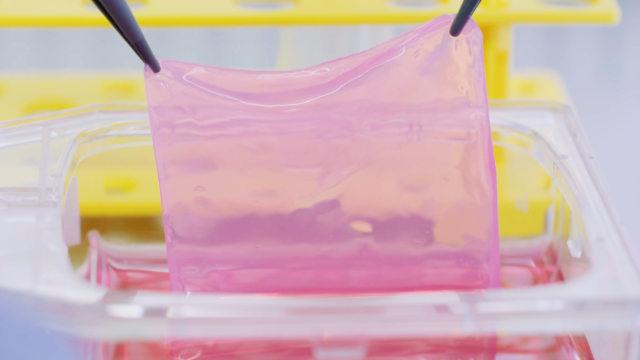
Researchers at UZH have been working on bio-engineered skin grafts for over 15 years, leading to the founding of spin-off Cutiss that produces living skin tissue from the patients’ own cells.
The Wyss Zurich Translational Center is celebrating its 10th anniversary. The platform provides support to help first-class research projects make the step to clinical trials and progress to the founding of a startup company.
UZH physicist Ben Kilminster designs the most precise parts of the enormous CERN detectors to look for flaws in the physical models used to explain the beginnings of the universe.
Students spent 30 hours working meticulously on business ideas for space. The Starlab Space Mission Hackathon shows the level of networking that goes into UZH’s commitment to supporting cooperation between research and industry in the aerospace sector.
Strengthening Global Supply Chain Management with AI and Mathematical Insight
Funded by a BRIDGE Discovery Grant, UZH physicist Nicola Serra and ETH mathematician Alessio Figalli plan to pair optimal transport theory with AI to fortify supply-chain weak spots.
If you want to be an entrepreneur, you have to be able to collaborate and develop solutions across disciplinary boundaries. This is a skill that can be learned. More than 150 students have already participated in a UZH Entrepreneurship Bootcamp.
How can Switzerland continue to grow as a leading hub for science-based innovation? High-profile leaders from the economy, science and politics gathered at an event organized by the Deep Tech Nation Switzerland Foundation at UZH to discuss this challenge.
With a novel technology, around 25 antibodies can now be tested simultaneously in a single mouse. This should speed up the R&D pipeline for new drugs and hugely reduce the number of animals required.
In lupus, the immune system attacks its own structures, causing inflammation and organ damage. A new study shows that natural active ingredient gluconolactone could offer a more targeted therapy.