From Dübendorf to Outer Space
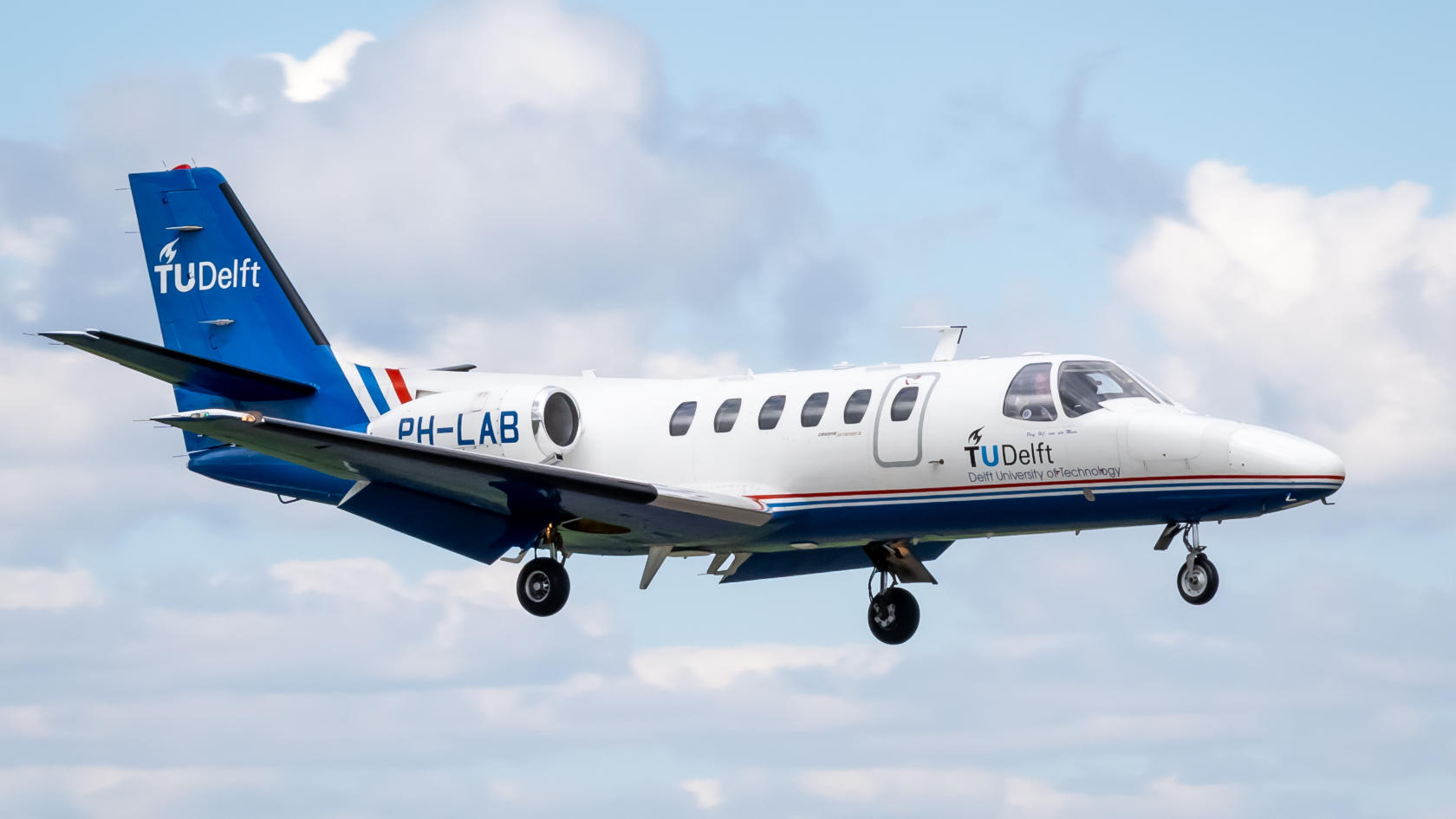
Inside the hangar, talk turned to new markets in space; outside, a research aircraft was preparing to land. On board were experiments that had briefly been exposed to weightlessness during a parabolic flight. A short while later, participants in the 8th Continent Lab were able to board the plane and get a firsthand look at how experiments in Dübendorf can turn into new real-world applications.
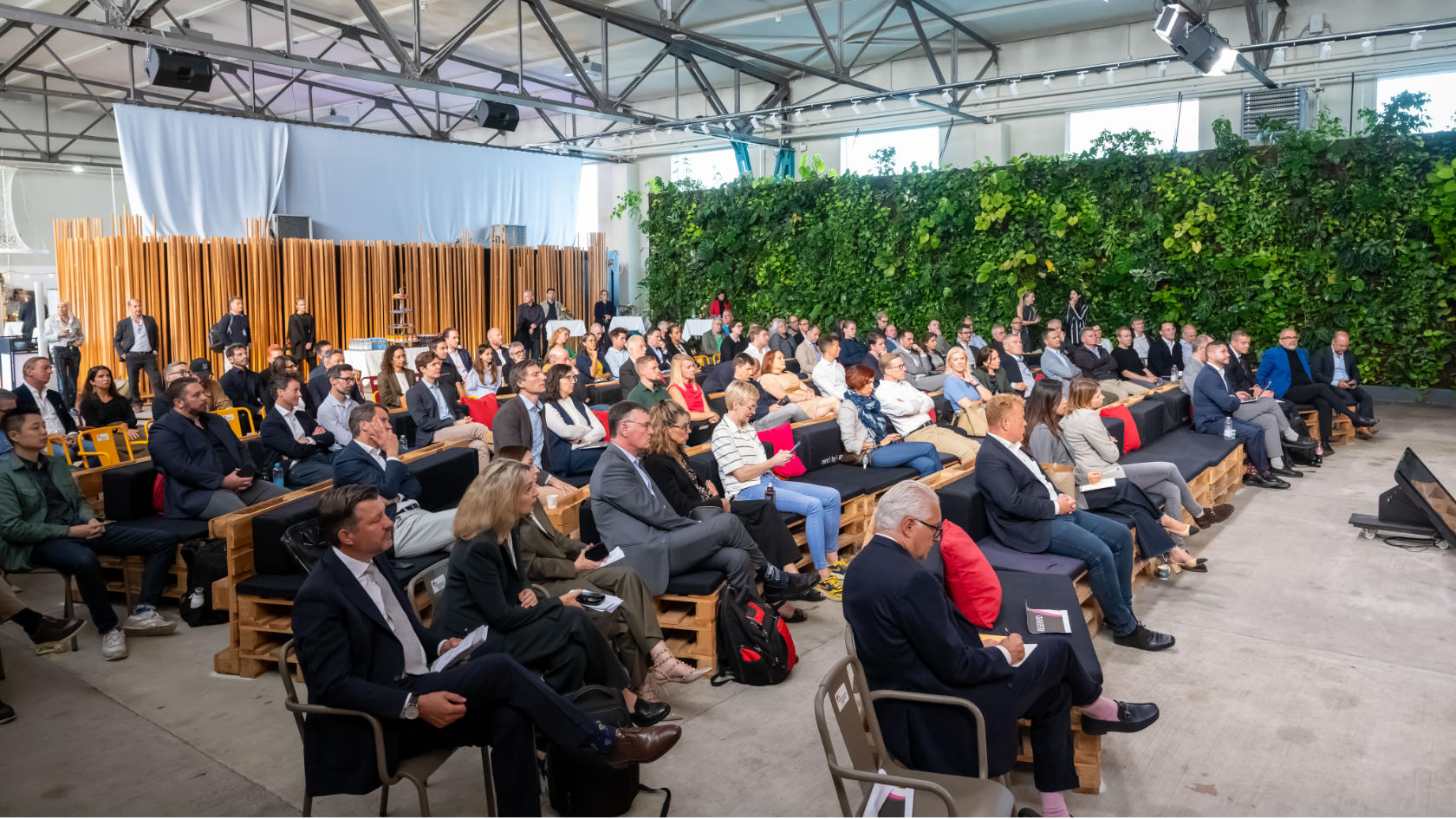
The gathering at Innovation Park Zurich brought together 150 guests from academia, industry, finance and the space sector. The theme of the event was the eighth continent – another name for outer space, which is increasingly offering new opportunities for businesses outside the traditional space industry. With UZH’s involvement, Innovation Park gave attendees a chance to meet potential partners and develop ideas for new business ventures. Some of the technologies behind those ventures had landed right in front of participants’ eyes that same day.
The orbital economy
“The next chapter of the space economy won’t be written by the space industry alone,” said Peter Bodmer at the opening of the 8th Continent Lab. Bodmer, President of the Innovation Park Zurich Foundation and Vice President of the UZH Board of the University, had invited attendees in his role as host to this first Swiss space economy event.
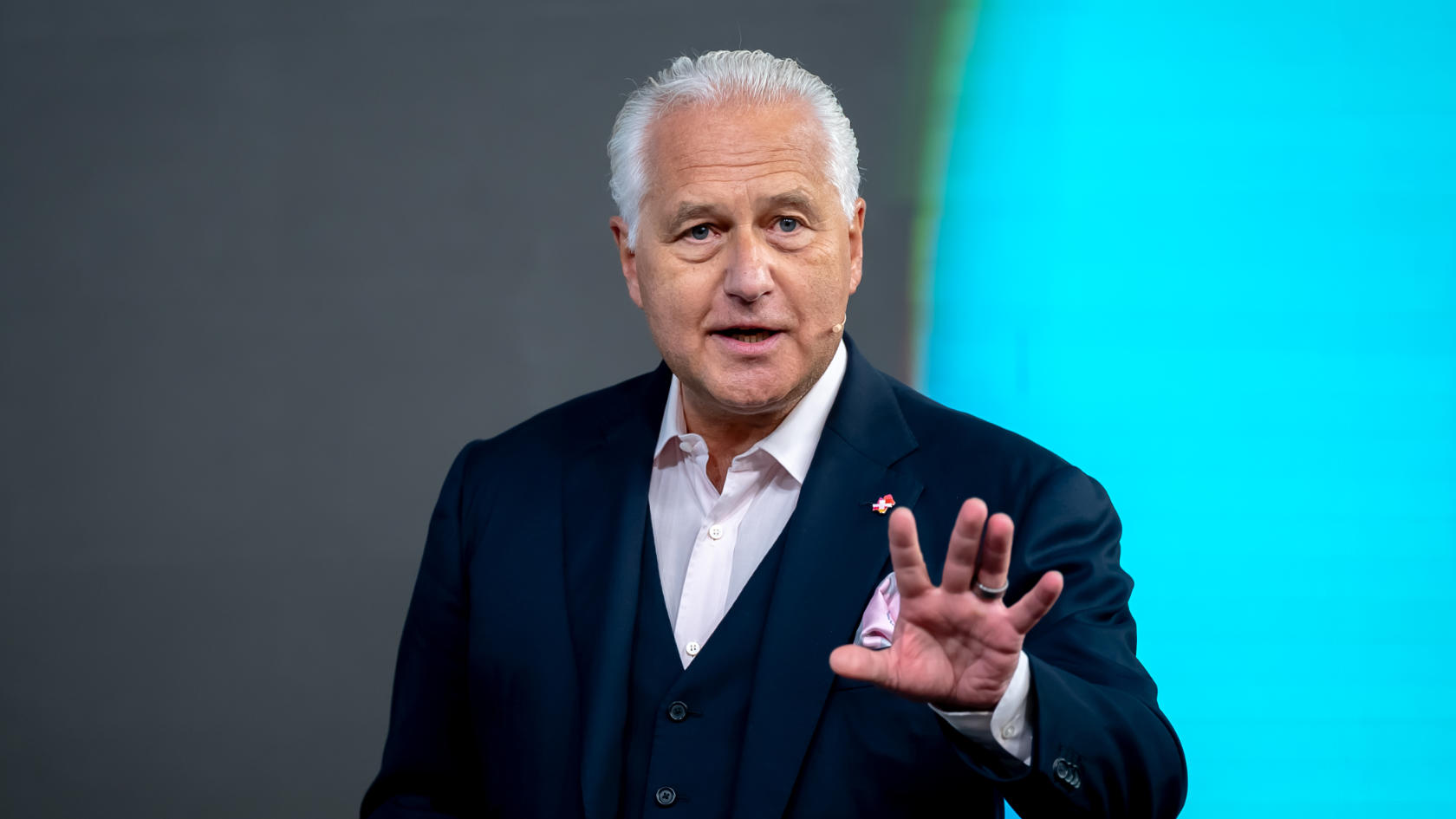
He pointed to three developments making space increasingly attractive to companies outside of the space sector.
- First, the economy is already more closely tied to Earth’s orbit than many realize: insurance companies use satellite data to assess climate risks, energy companies use it to detect leaks, and transport networks and power grids rely on precise timing signals from space. Many companies, he said, are already part of the space economy without knowing it.
- Second, commercial space stations such as the proposed Starlab fleet would let many more companies conduct research and even develop production processes in space – for producing human tissue, medications or new materials, for example.
- Third, applications that used to be mostly unprofitable are now commercially viable thanks to rapidly falling launch costs.
Bodmer illustrated the growth potential with a forecast from the World Economic Forum and McKinsey: the space economy was $630 billion in 2023 and could grow to $1.8 trillion by 2035. More than 60 percent of that growth, he noted, would come from industries outside of the traditional aerospace industry, including logistics, food, retail, communications, insurance and pharmaceuticals.
“There has never been a better time for Switzerland to get involved in outer space,” said Bodmer. He pointed out that standards, business models and partnerships are already taking shape, and latecomers will have to play by rules that others have already set.
Switzerland should invest in itself
Thomas Zurbuchen has confidence in Switzerland’s space-related potential. The head of ETH Zurich Space and former NASA science mission director pushed back against the idea that the country is too small to play a major role in the space economy. With its research community, industrial base and human capital, he argued, Switzerland brings a great deal to the table: “We need to invest in ourselves. It would be absolutely absurd not to.”
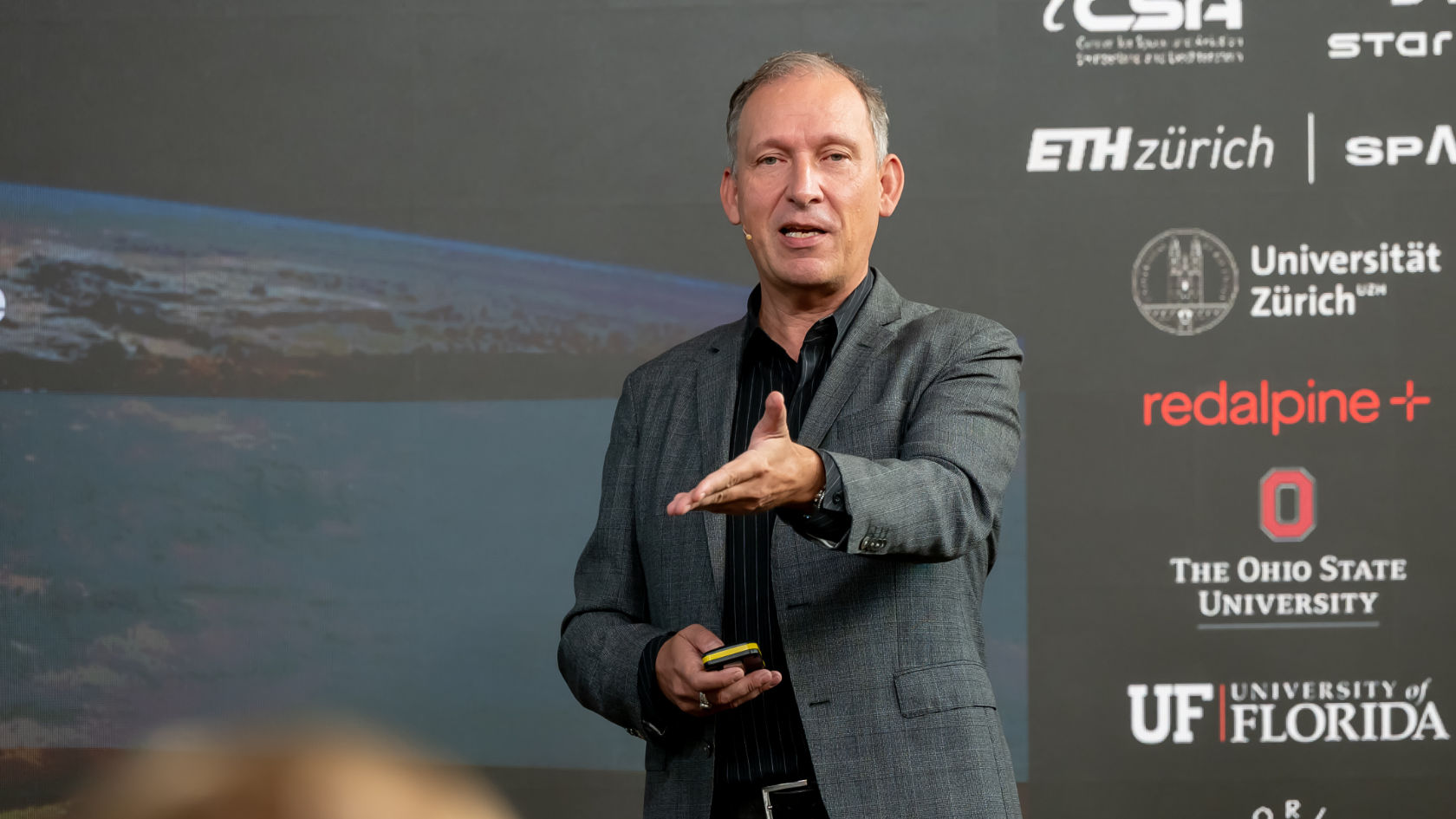
What matters, he said, is strategically deploying the country’s unique strengths, which include precision technology, robotics, data processing and life sciences as well as the expertise of universities and other higher education institutions.
Strategic importance for Europe
During the finance panel, MIT’s Lars Frølund stated that the space economy is strategically important for Europe as a whole. Independent capabilities in space, he said, are essential for secure communications and technological sovereignty. According to Frølund, Europe has invested heavily in research and start-ups but would now need to strengthen demand for its own technologies; otherwise, successful companies might move to geographies offering bigger markets and more capital.
Harald Nieder from the venture capital firm redalpine compared current developments to the expansion of the railway system in the 19th century. Entire industries, he suggested, could eventually be built atop the infrastructure now taking shape in space.
Potential for life sciences
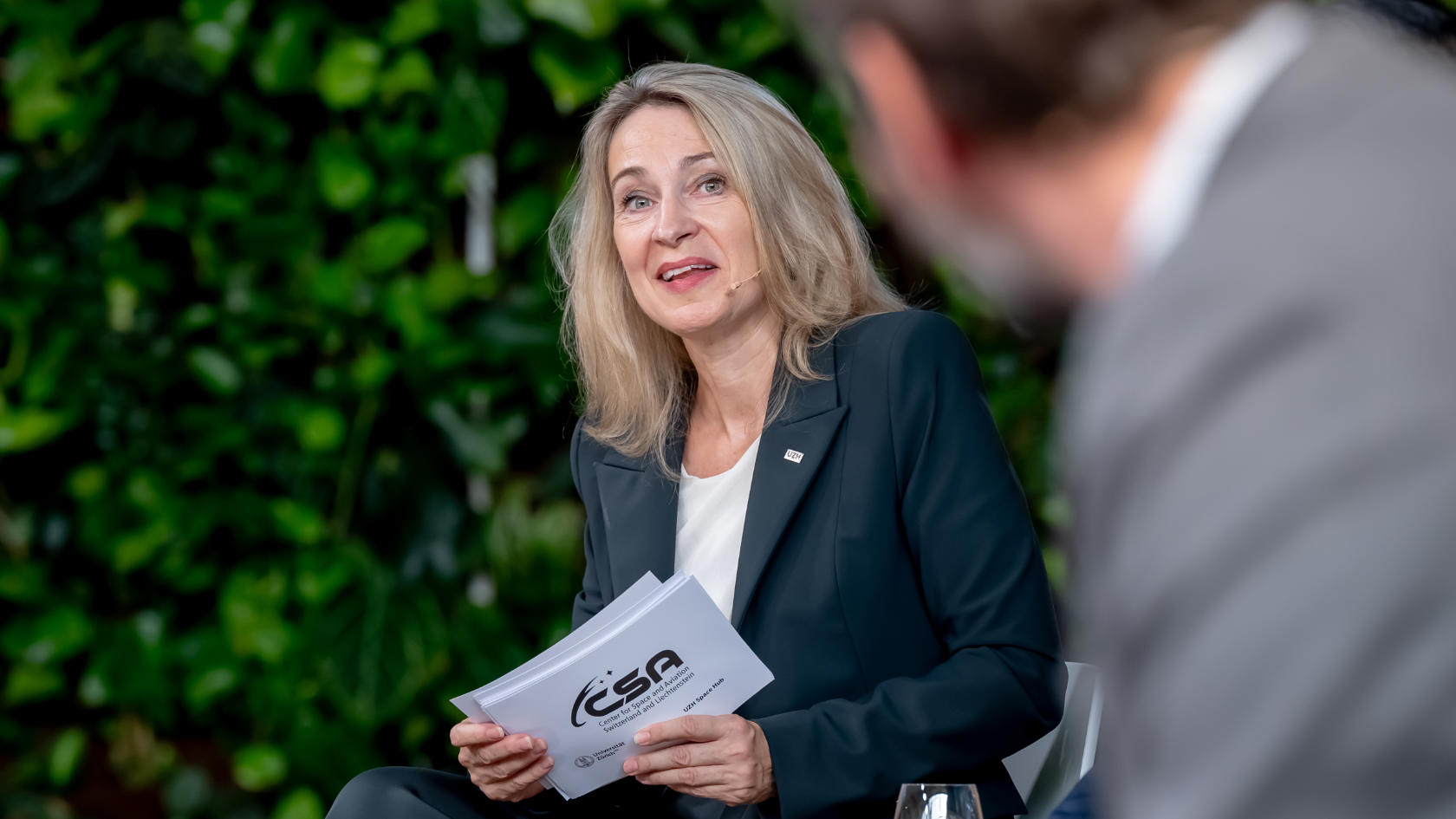
A panel moderated by UZH Vice President Elisabeth Stark discussed the significance of space-based experiments for the life sciences. Luis Zea, scientific director of Starlab Space, explained what his commercial space station intends to offer once the International Space Station (ISS) is taken offline in the 2030s: “We provide incubators, microscopes, centrifuges and freezers – essentially much of what you’d find in an ordinary lab.” That would give researchers and companies easy access to a research campus in Earth’s orbit.

Cora Thiel, deputy director of UZH’s Institute of Aerospace Medicine, showed where this could lead. She presented a method for producing human tissue in space, jointly developed by UZH and Airbus. Adult stem cells are sent into orbit, where under microgravity – conditions of near weightlessness – they grow three-dimensionally without needing artificial scaffolding. In addition, the tissue develops more fully and more evenly than it would under conventional conditions on Earth.
This process yields small tissue structures known as organoids, which can be made from cartilage, bone or liver tissue, to name a few examples. These mini-tissues could be used in future versions of personalized medicine and as alternatives to animal experiments. Eventually, they could also be used for transplants in human medicine. “That's our vision,” said Thiel.
Human tissue from space
Two missions to the ISS have shown that this method works. The most recent mission in 2021 saw the successful production of around 250 organoids. The UZH spin-off Prometheus Life Technologies is now working to automate production and increase the yield by a factor of ten – possibly even a hundred.
The medical need extends far beyond that. Thiel expressed confidence that new orbital infrastructure could enable production on a much larger scale. According to calculations she presented, the planned Starlab space station could generate enough tissue each year for roughly 50,000 patients, assuming certain conditions and the extension of production capacity. Theoretically, ten similarly equipped stations could supply transplantation material for half a million people. For context, Thiel pointed to an estimated annual global need of around 400,000 liver transplants worldwide. Much more research, development and regulatory work would still need to be done before these tissues can actually be used in transplants. “We should use space to improve life here on Earth,” she said.
Growing interest in parabolic flights
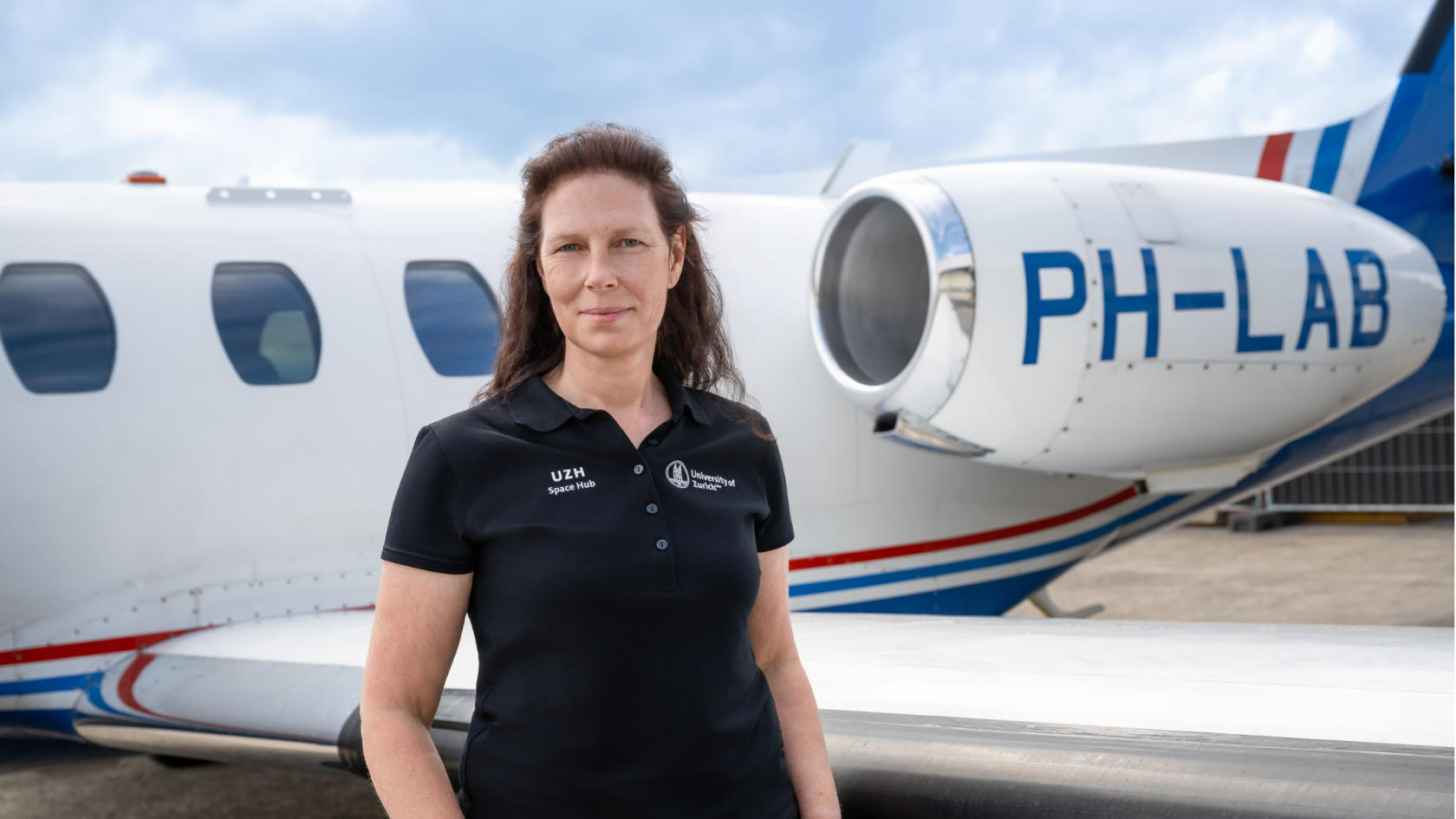
Shortly afterward, Thiel led guests out to the airfield, where a Cessna had just returned from its final parabolic flight of the year.
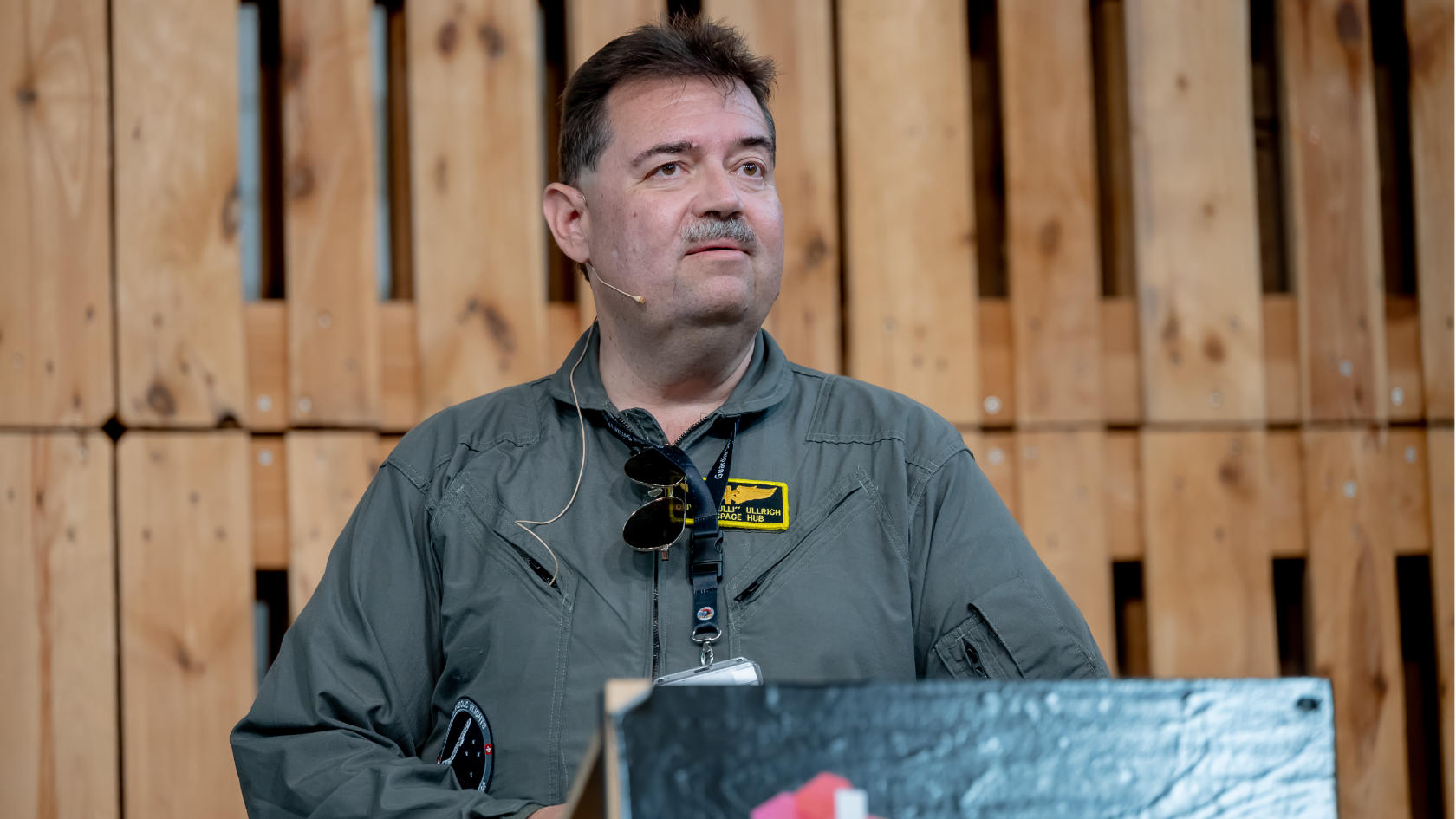
Oliver Ullrich, Director of the UZH Space Hub, Professor of Aerospace Medicine at UZH and founder of the Swiss parabolic flight program, stood alongside the crew to answer questions. “Parabolic flights let us test equipment and procedures in free fall under conditions of near weightlessness,” he explained. “That allows us to prep experiments that will later be conducted on a space station.”
According to Ullrich, this latest campaign – the eighth in eleven years – marks a turning point. “In the past, we mainly studied how weightlessness affects biological processes,” he said. “Today, we research how we can deliberately use it to develop new products and therapies.”
The flight campaigns that Ullrich helped build eleven years ago in Dübendorf now draw growing numbers of researchers and companies. The Center for Space and Aviation Switzerland and Liechtenstein (CSA) plays a central role in this development. Co-founded by UZH in 2024, the consortium now comprises 13 academic partners along with additional institutions from the aerospace sector. It has allowed UZH to expand its space activities and is the backbone of its growing international network. The CSA was also a co-organizer of the 8th Continent Lab and ran this year's flight campaign under Ullrich’s direction.
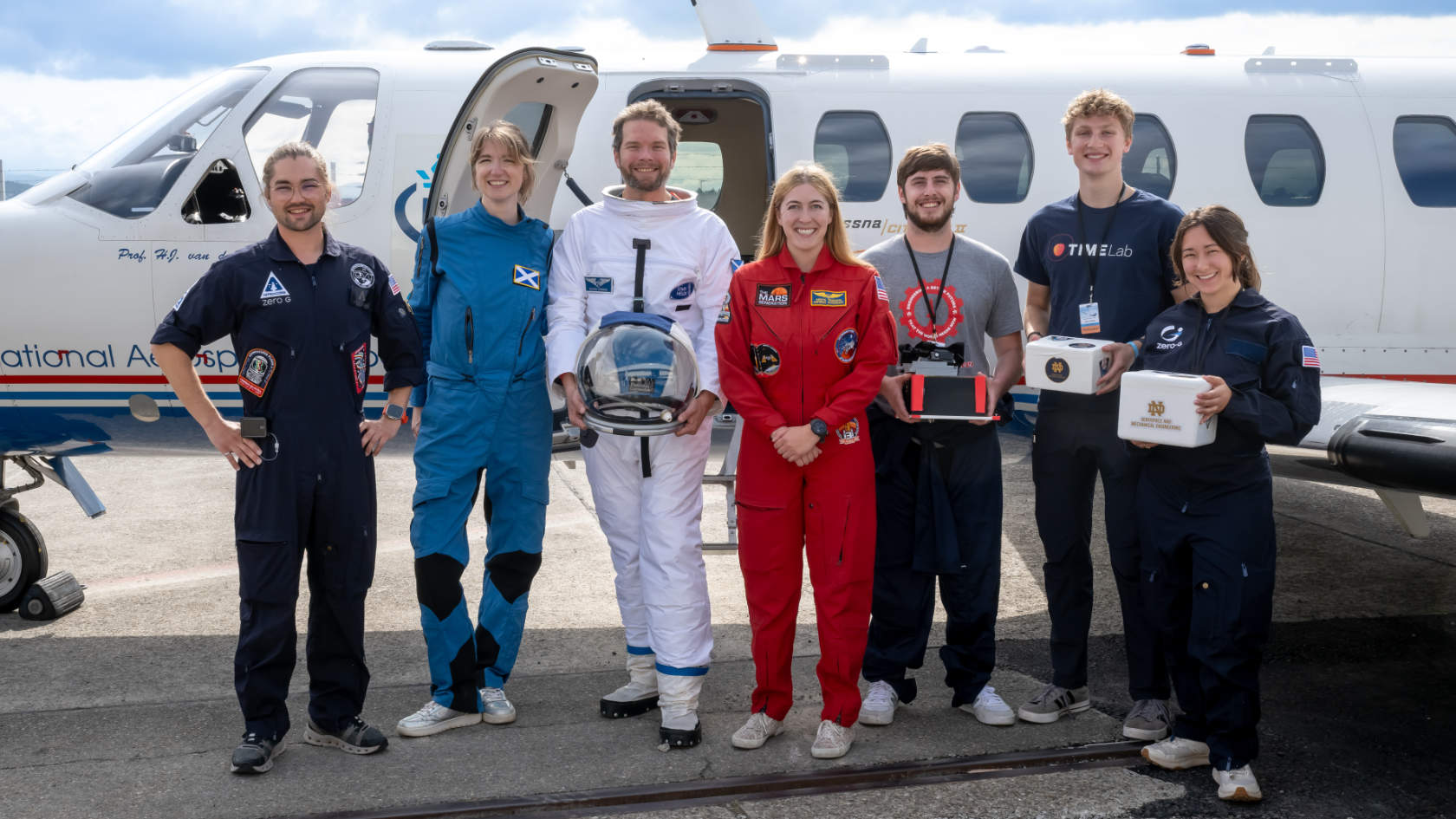
This year’s campaign – the eighth since 2015 – showed just how far these collaborations now extend: in addition to UZH spin-off Prometheus Life Technologies and the research and technology organization CSEM, nine teams from the University of Florida also took part, thanks to a strategic partnership with the CSA agreed on in 2025. Research teams affiliated with two other CSA partners – Ohio State University and Starlab Space –participated as well.
Of the 18 experiments on board, 11 were directly related to pharmaceuticals, drug development or biotechnology. Other experiments tested technology for future space stations.
Direct access to space stations
Ullrich delivered decidedly good news about the future of these partnerships: effective immediately, researchers and companies from the Canton of Zurich would have seamless access to the ISS and its successor station Starlab, thanks to Starlab Space. “Researchers and companies can develop an experiment at Innovation Park Zurich, test and qualify it on a parabolic flight and then prepare it for use on the ISS,” he explained.
To merge these steps, the CSA at Innovation Park Zurich works with several international partners. The Royal Netherlands Aerospace Center (NLR) and Novespace provide parabolic flights. A partnership with Space Florida builds a bridge to Cape Canaveral and other Florida spaceports. The Starlab network opens up access to the ISS and will allow use of the future Starlab space station once the ISS is retired.
The result, Ullrich said, is a European gateway to commercial spaceflight, now immediately accessible by both national and international partners. “This gateway should be fully established by the end of 2030,” he said. According to Ullrich, this means that Dübendorf is being developed into a European hub where researchers and companies can develop their projects and prepare missions for research and the commercial use of low Earth orbit.
To mark the opening of this new gateway to commercial spaceflight, the CSA and Starlab Space are offering three selected experiments free, low-risk access to the ISS. Interested parties can submit their projects here.
Building on the momentum
After touring the Cessna on the airfield, the afternoon continued with discussions on potential development and business opportunities at five “networking islands” organized by UZH. Topics ranged from life sciences, new materials and manufacturing processes to data centers, artificial intelligence and flight platforms, plus discussions on the funding of space technology. Direct exchanges between researchers, companies and investors once again showed the breadth of possibilities offered by the space economy.
Elisabeth Stark, UZH Vice President and a member of the CSA foundation board, came away from the conversations with a great deal of confidence: “The 8th Continent Lab was a true founding moment. Bridging space and non-space sectors is now an established path forward – and one that has already succeeded in some areas. UZH, the CSA and its partners, Innovation Park Zurich, the Canton of Zurich and Switzerland have all gained visibility as pivotal players in Europe’s new space economy. That’s something we can be proud of.”
Peter Bodmer hopes to build on the day’s momentum: “The 8th Continent Lab showed just how much scientific excellence, technical expertise, entrepreneurial experience and capital can be found here in Zurich. We want to build on that to win over even more companies from industries with little historical connection to spaceflight. We need these companies to help write the next chapter of the space economy here in Switzerland and in Europe.”