Built for Fish, Not Fast Food
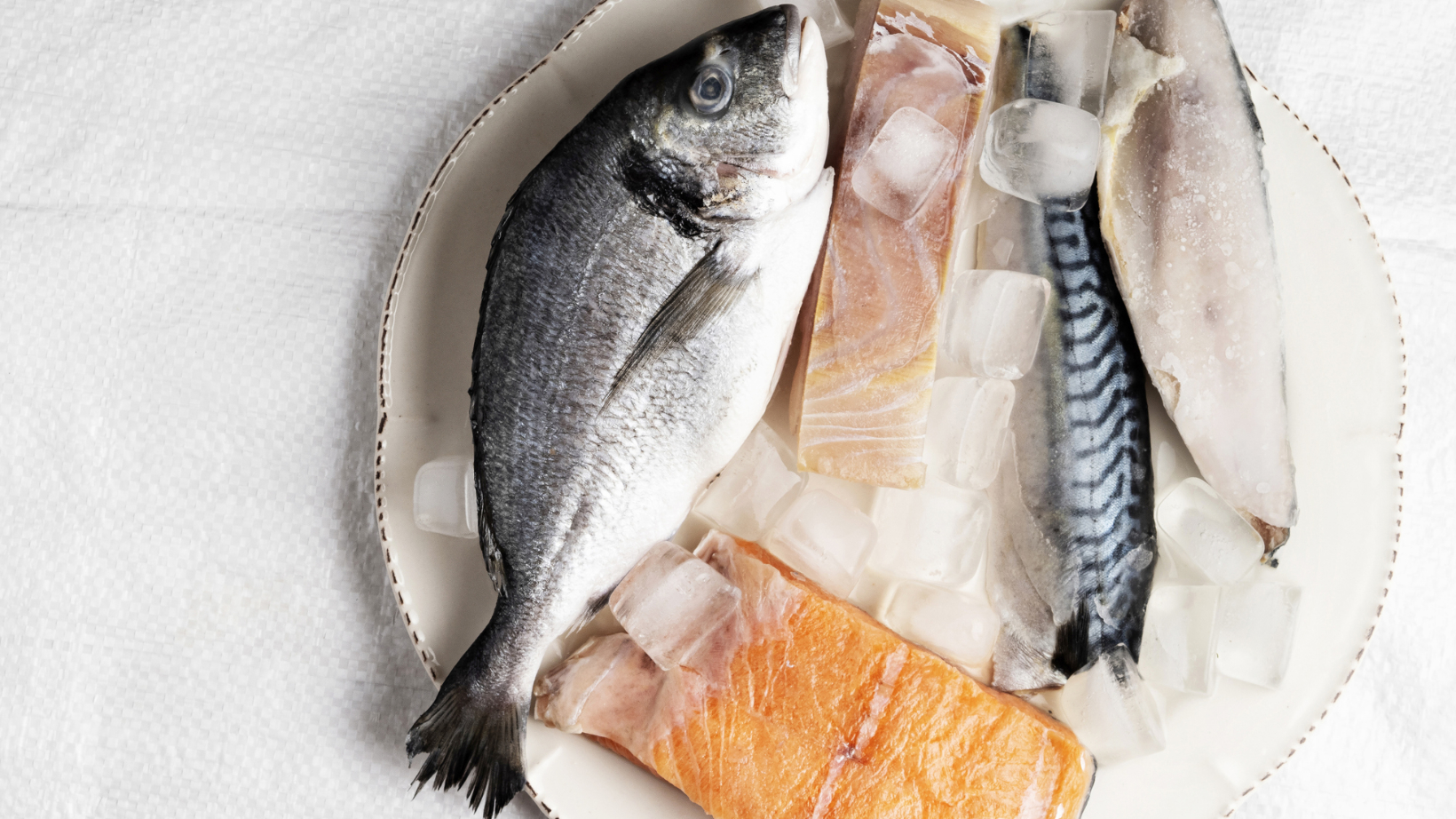
Could I convince my daughter to eat more fish if I told her that it might improve her school grades? Sounds unlikely, but this is precisely the conclusion of a study claiming that children can improve their cognitive function if they eat a small portion of fish (112 grams) every two weeks. The study suggested that this improved the likelihood of getting better school grades in math by 16%, and in German by 19%. Fish is a rich source of long-chain polyunsaturated fatty acids that are good for our brains. Yet, however promising the influence of omega-3 fatty acids on academic performance, my daughter will opt for the burger with ketchup and mayo every time.
And therein lies the crux of the issue. Our heads crave the fast food, while our bodies need the fish. Burgers and similar foods, along with ketchup and mayonnaise, belong to the category of ultra-processed foods, or UPFs. These are foods that our bodies are not at all evolved to cope with. “Biologically and genetically, our bodies haven’t changed since the Neolithic period,” says Nicole Bender, professor of clinical evolutionary medicine at UZH. This mismatch can cause us all sorts of trouble.
Modern diets overwhelm our bodies
Nutrition played a key role in the evolution of hominids to humans. Over the course of five to seven million years, the human genome adapted to the changing environmental conditions, from the late Miocene to the Neolithic period, from prehistoric man via nomadic hunter-gatherers, to settled shepherds and farmers around 7,000 years ago. By contrast, the switch to modern diets has happened in the blink of an eye: it is just under 200 years from industrialization in the 19th century to today’s high-tech processed foods. How are our bodies meant to keep up? “Genetic changes take time,” says Bender. And this is something our bodies haven’t had, which is why they are unable to cope with modern diets.
The imbalance between our genetic makeup and the modern environment is responsible for many lifestyle diseases, including cardiovascular diseases and metabolic disorders such as diabetes and obesity, autoimmune diseases, certain types of cancer, and mental illnesses. Modern diets confront our bodies with ultra-processed foods that are not only lacking in nutrients, but that also contain added sugar, salt, bad fats and unfamiliar additives. The raw materials used in these products are often of poor quality.
What’s more, we move about much less than our ancestors did. After a long day at work, it’s tempting to grab a ready-made pizza from the convenience food counter or get a takeout burger delivered. The evolutionary biologist nods with a smile. The body wants to save energy. But nowadays, between working at a desk from home or in the office, spending the evening watching a series on the sofa, and eating microwave snacks, we don’t need as much energy as our ancestors, who were out chasing after wild animals or later laboring in the fields. These days, at best we might be chasing a ball on a tennis court or football pitch, and lifting weights at the gym rather than sacks of potatoes. And then rewarding ourselves with an energy drink.
Big brains need energy
Nature was good to us in this respect. “The need for fat was originally a useful evolutionary mechanism, but nowadays the abundance of high-calorie food causes overweight and fat accumulation,” says Bender.
When the human brain got bigger over a million years ago, energy demands increased accordingly. In fact, humans store an exceptionally large proportion of fat in the body. A slim woman has a body fat percentage of 20%, while a female chimpanzee only has 5% body fat. “We assume that the high body fat percentage in the human body has to do with supplying our big brains with energy,” says Bender. As the evolutionary biologist explains, the body has to ensure that during a pregnancy and lactation, there are sufficient fat reserves to supply energy for the baby’s brain development.
Compared with primates, humans have extremely energy-hungry brains, which in adults account for 20 to 25% of the body’s overall energy consumption, and in infants as much as 60%. Another theory is that fat reserves in the body are designed to tide over periods when food is scarce. This would explain why men also build up fat reserves, albeit to a slightly lesser extent than women. We still have this physical disposition today.
Energy supply was crucial in the evolution of the human brain. Part of this was the move from eating a mostly plant-based diet to a more omnivorous diet, which happened in the early hominins, explains Nicole Bender. In the beginning, our ancestors ate a diet of raw meat, insects, mussels, fish, probably also carrion, and soon started hunting larger animals, too. Then they discovered fire. The earliest evidence of cooking – which made food easier to digest – can be traced back to Homo erectus. Meat is much more energy-dense than plant-based foods. “This is how the brain was increasingly supplied with essential amino and fatty acids, which promoted cognitive development,” says Bender.

Biologically and genetically, our bodies haven’t changed since the Neolithic period.
Animal proteins are also easier to metabolize than plant ones as they are related to our own proteins. All amino acids that we need are already contained in animal proteins, which means they can be utilized more easily. Plant proteins, on the other hand, don’t match our own as the amino acids are distributed differently. “This is why it’s so important that vegan diets contain a variety of vegetables, pulses, nuts, cereals, etc.,” says Bender. However, vitamin B12 is only found in foods of animal origin. People who eat a vegan diet therefore have no choice but to take a supplement to ensure they get enough of this vitamin, which is essential for various functions, including making blood cells, converting food into energy, and supporting nerve cell function. This is also recommended by the Swiss Vegan Society. Otherwise, over time people can experience dangerous signs of deficiency, right through to anemia and paralysis.
The transition to an omnivorous diet also had anatomical consequences. Next time you’re standing in front of a chimpanzee – at the zoo, for example – compare your stomach to the chimpanzee’s. You will probably see that its stomach is much bigger than yours. This is linked to the digestive organs, as those of great apes are much bigger than ours. Because of their simpler digestive system, humans have a much shorter large intestine and a longer small intestine than other great apes.
The jaw also got smaller. While prehistoric humans needed a sturdy jaw and sharp teeth to crush tough wild plants, our narrow chins sit elegantly on our slender necks and we can eat tender fillets of meat with a few refined bites. Wisdom teeth are a relic from these ancient times. They sit pointlessly at an angle in the dark recesses of our mouths, or bother us because they don’t have enough space. “It’s possible that wisdom teeth will disappear completely in the distant future,” says Nicole Bender. In a sense they are clearly observable signs of the evolutionary process.
Milk and carbs
Agriculture, which emerged in the Neolithic period 7,000 years ago, gave evolution another decisive boost. Humans settled, wild cropswere domesticated, and animals became livestock which was farmed for milk and meat. “We as adults have only been able to consume milk since quite recently,” says Bender. Milk consumption is actually reserved for nursing young, as can be seen in mammals. The production of the enzyme responsible for the digestion of milk is stopped after the early years of life. However, humans have drunk milk regularly ever since the Neolithic period.
As it happens, humans from certain regions – including Europe, the Middle East and specific parts of Africa – have detectable mutations of the enzyme, which support milk digestion in adults. In other regions, for example in Asia, this enzyme is rare. “That is evolution in process,” explains Bender, “this mutated enzyme is still spreading.” But even closer to home, there is variation in people’s ability to digest lactose. And in old age it can even decline.
Another evolutionary aspect of emerging agriculture was the huge growth in the consumption of starchy foods. The domesticated crops that were grown on farms meant that grain, barley, potatoes, rice and corn found their way into people’s diets, or were further processed to make products including bread, mash and flat cakes. From then on, carbohydrates were consumed in large quantities. This placed demands on the stomach, and the digestive system adapted accordingly. “This is one of the most recent genetic changes that also shapes our current eating habits,” explains Nicole Bender. For this reason the evolutionary biologist sounds a note of caution when it comes to the popular low-carb diets for weight loss. The problem is the reduced dietary fiber intake, explains Bender. Fiber is essential to gut health and modern diets are often lacking in it.
While pasta and bread can be tempting, many people complain of feeling heavy and bloated after eating them. “When people talk about gluten intolerance, this is often related to the highly-processed wheat which is very gluten-heavy and can cause discomfort,” says Bender. To manufacture bread more efficiently, many additives are used. Our stomachs are not made for these kinds of industrially processed foods.
So should we be eating the same way as our ancestors did in the Stone Age, as proposed by the Paleo diet? Nicole Bender shakes her head. That diet is too meat-heavy, she explains. A plant-based diet containing plenty of vegetables, fruit, wholegrain foods, pulses and nuts, combined with moderate consumption of animal proteins, meat and fish still corresponds to what our bodies need. This matches the Swiss dietary recommendations (food pyramid) issued by the Federal Food Safety and Veterinary Office, for which Bender is responsible for the chapter on milk and dairy products. Ideally, we should be cooking our meals from scratch using fresh, preferably unprocessed ingredients, and opting for local and organic produce.
What does my body need?
“More important than any recommendation is being in tune with our bodies,” says Bender. Because physiological needs are very individual. Her top tip here is to practice mindful eating. Before we are lured in by the temptations of the food industry to want things that are not actually good for us, we should focus on our inner needs. Am I really hungry? When have I had enough and am I full? What exactly does my body need? According to Bender, these are the three questions we should ask ourselves when eating.
And what if we find ourselves tempted to pick up a takeout burger again? Hold back this time. Or if you really want one, prepare your own using fresh ingredients. It tastes better anyway.