A Bravery Bead for Each Treatment
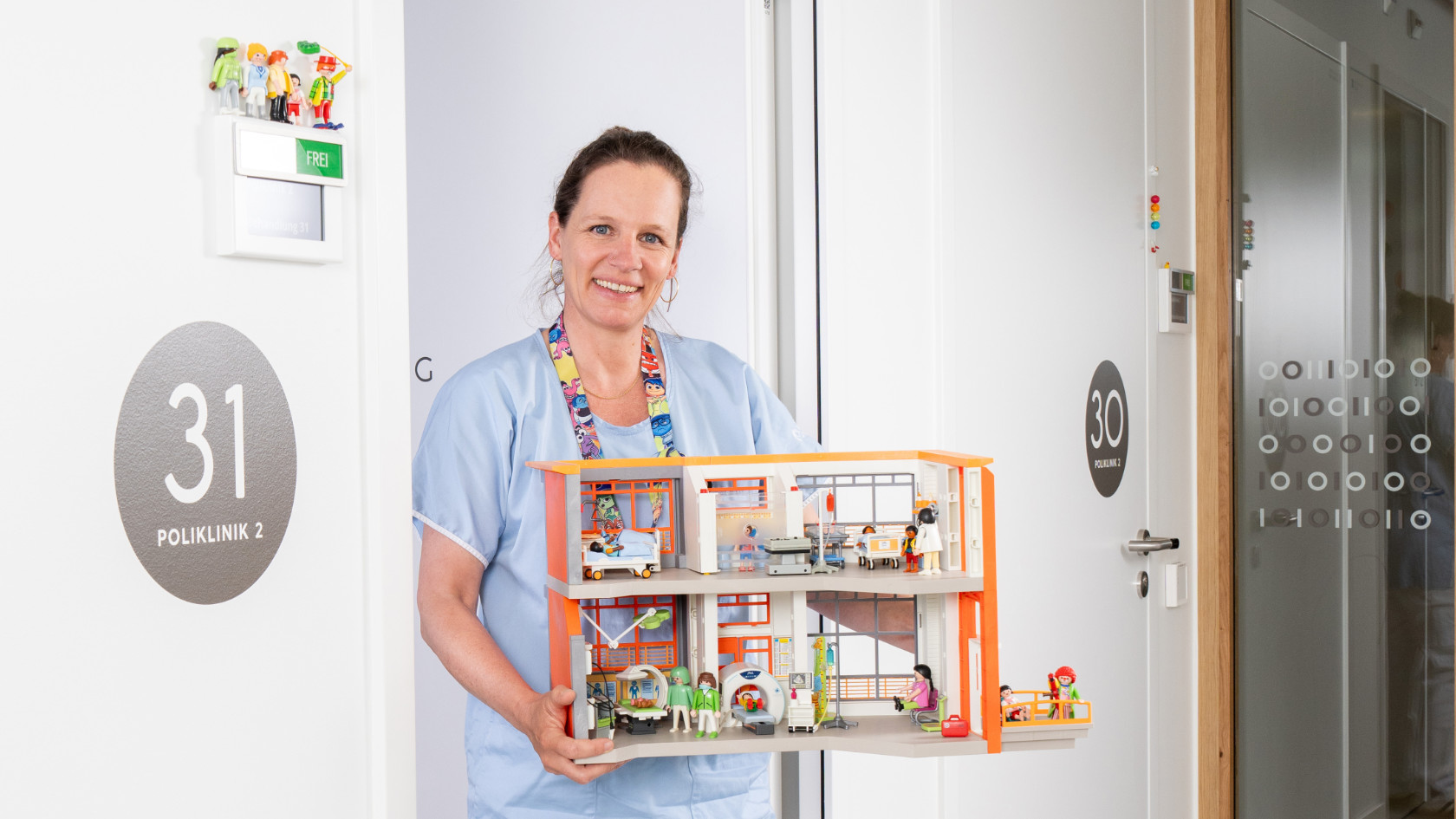
A small clown figure is perched on the name plate next to Anna Graf’s office door. Her arsenal of Playmobil includes an entire hospital ward, an ambulance and various other hospital paraphernalia – the popular plastic figures give children the opportunity to re-enact various hospital situations.
Again and again, Graf witnesses how abruptly a life can change. As lead psychologist at the University Children’s Hospital Zurich, she meets the children or adolescents and their families on the day the cancer is first diagnosed. Ahead of them lies a difficult time with intensive medical treatments, a time during which many things may unravel emotionally, socially and organizationally. Graf supports the families throughout the entire course of treatment, in close cooperation with the treatment team.
Psycho-oncology – which provides psychological advice and support to cancer patients – is now a firm part of cancer therapy for children and adolescents.
Offering guidance
“What the patients need largely depends on their age,” says Anna Graf. She describes the first phase of treatment as a kind of crisis intervention. The initial aim is to “alleviate diagnosis shock and acute stress symptoms, and provide guidance – often more so for the parents than the children.”
Graf often relies on objects to illustrate the different treatment phases. These include the chains of beads that many pediatric cancer patients carry with them. For some children, the chains are only short, for others they can extend to a meter or more. Anna Graf opens a drawer in the treatment room on the oncology ward and points to a collection of colorful glass beads – some have stripes or dots, others feature faces or animal motives.
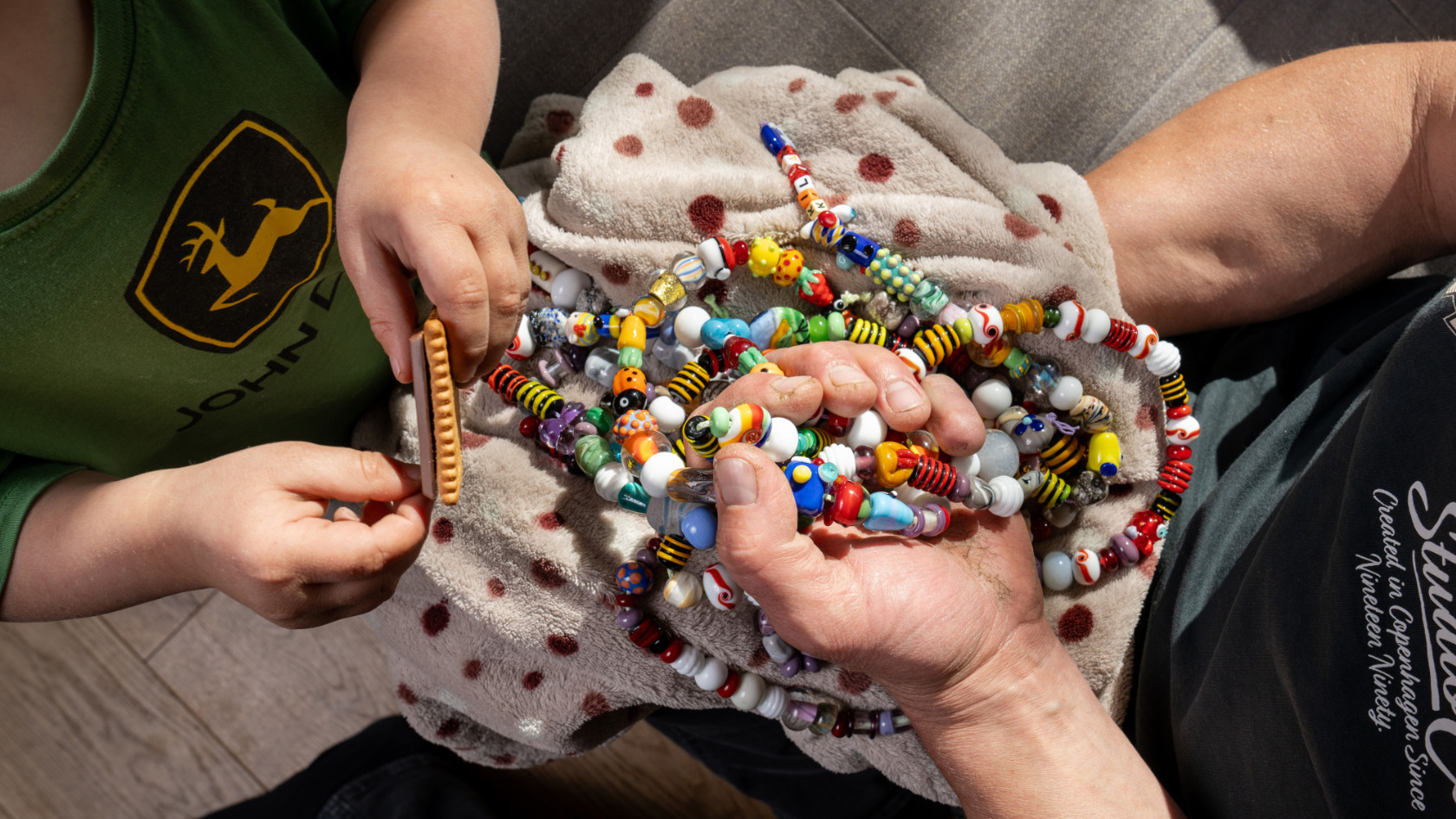
“These are bravery beads – at the beginning of treatment, we always thread an anchor and the name of the child onto the string,” says the psychologist. This is followed by a glass bead for each step in the treatment the young patient has to endure – every finger prick, every dressing change or at the start of chemotherapy, for instance. “This bead looks like Chemokasper, the character in a picture book designed to give young patients a child-oriented explanation of chemotherapy,” Graf explains.
Playmobil and soft toys
How does one talk to a child about cancer? How much does a four-year-old understand, or a teenager? How can fears relating to procedures, pain and loss of control be alleviated? The illness brings many questions with it. In order to address them, Graf adapts her treatment methods accordingly – conversations, games and drawings with which the young patients can visualize their feelings all form part of her toolkit.
This enables her to prepare the children for the many procedures, as their cooperation in the treatment is key. When it comes to processing what they have experienced, role play with Playmobil and other age-appropriate material is often helpful.
We try to give as much scope of action back to the children as we can.
If a child is afraid of a particular medical procedure, Graf’s first step is to clarify what they have or haven’t understood. Sometimes misconceptions can become embedded, making a situation more threatening than it actually is. Together with the child, she then develops strategies: what might be helpful while still at home? Is there a soft toy that can come along to hospital? Does the child need distraction, or as much control as possible? “We try to give as much scope of action back to the children as we can,” says Anna Graf.
The lanyard holding Graf’s badge features the cartoon characters of the animated film Inside Out. In the popular film and its sequels, emotions such as joy, sadness, pride, disgust and anger are personified as characters. “Many children know the film, which helps them understand my role,” she explains with a smile. One of the worksheets she uses shows jars with these cartoon characters. Each represents a different emotion. The children can draw orbs in the jars and thereby describe their emotional state.
-
 To help them stand out, the psychologists at the University Children's Hospital wear lanyards featuring characters from the animated film Inside Out.
 -
 Graf uses worksheets with the cartoon characters that represent various emotions such as joy, pride, disgust, sadness and anger. The young patients can fill the emotional jars with thoughts and scribbles to describe how they are feeling.
 -
 Bravery beads – striped, polka-dotted, featuring faces or animal designs – can help the children and teens with cancer visualize the different stages of their treatment.
 -
 The beads also feature motifs from Der Chemokasper, a children's book that explains how chemotherapy works to young patients in a relatable way.
 -
 Preparing for the next round of chemotherapy: Drawing and creating step-by-step plans can help children cope with the stressful treatment.
 -
 Role-playing with Playmobil also helps children process their experiences. (All images: Diana Ulrich)
“Recently, a patient filled the envy jar to the brim with orbs, and the anger jar too,” Graf relates. “She was envious of a fellow patient who had been discharged and angry about the isolation after a treatment. These conflicting emotions were thus made tangible and we could talk about them.” In an attempt to be supportive, the patient’s mother encouraged her to draw some orbs into the jar representing pride too – but the patient didn’t feel like emphasizing the positive at that moment.
In pediatric psycho-oncology, the sick child is at the heart of everything. But the illness invariably affects the entire family. “We have a very systemic focus,” says Anna Graf. “It’s important to include the whole social circle.” With small children, support is mainly given via the parents, as they provide security and carry much of the burden. Siblings are often also strongly affected and in many cases want to be informed and involved. Sometimes the psycho-oncology team also supports grandparents, teachers or entire school classes.
Important aftercare
There’s a key difference to adult oncology that Anna Graf is keen to stress: with children and adolescents, the cancer impinges on a life phase in which many physical, social and psychological changes take place. It’s important to keep these developments in mind. “The aim is to support children and adolescents in such a way that they can still complete their developmental steps, albeit in adapted or delayed form,” says Graf. In early childhood, this could be emerging autonomy, at school age it might be friendships and confidence, in adolescence it’s about identity and belonging.
This aspect has become more important than ever, as growing numbers of children now survive having cancer. “It’s also about their future quality of life and the reduction of long-term effects,” Graf emphasizes. That is why aftercare is so important. The return to school and everyday life, altered body image, exhaustion and after-effects can be an issue for families long after the treatment has ended. The glass bead chains tell this story in a very tangible way. Each of the colorful beads is a reminder of a step in the treatment – and of the bravery it took.