5 Tips from Nature’s Editor-in-Chief
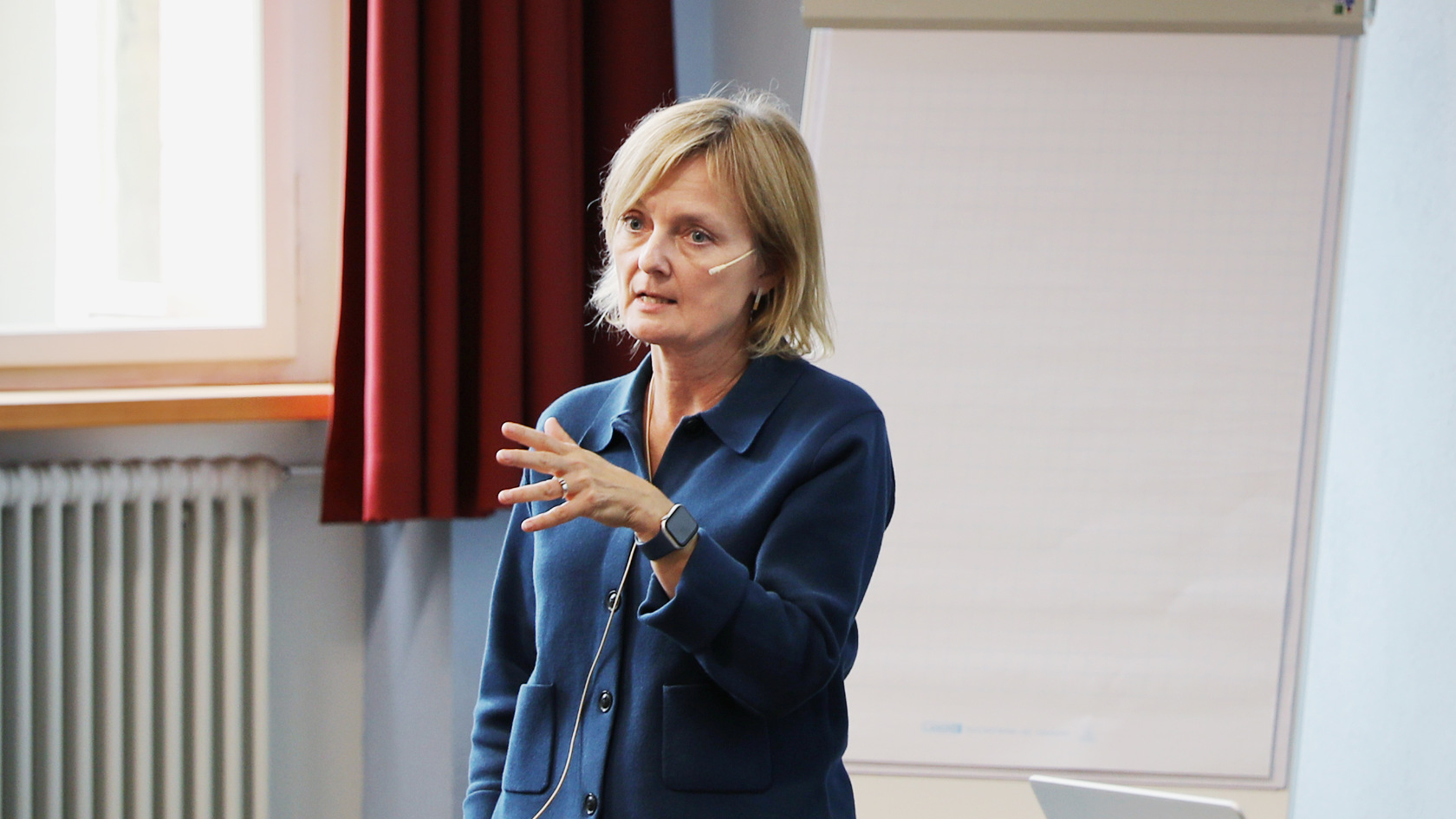
Around 200 early-career researchers from across all faculties filed into the lecture hall at the University of Zurich’s (UZH) main campus last Wednesday to listen to Magdalena Skipper, the editor-in-chief of Nature, shed light on her work and explain what editors look for in a submitted research paper. What emerged over the next hour were useful tips that might have dispelled a publishing myth or two.
#1: Tell a compelling story
“Research rarely unfolds in the neat sequence in which it eventually appears in a paper,” Skipper noted. Experiments may take researchers down different, meandering paths before a coherent picture emerges. When writing the paper, however, that picture needs to be clear. “You’re telling a story. A human being – an editor – is going to read your paper, so what they’re going to look for in a first submission is a compelling story. But it’s a scientific paper, so of course the story that you tell needs to be substantiated and you need to provide robust evidence to support your claims. […] When we publish your papers, we want to showcase the robustness with which you’ve done your research.”
A clear story helps readers follow a research endeavor from hypothesis along a whole string of modelling or experimental steps to its conclusion, identifying the conditions and limitations that apply to it. A compelling story will also highlight “what the advance is that your paper is offering. And of course, for Nature, we’re looking at a very high degree of advance,” Skipper added.
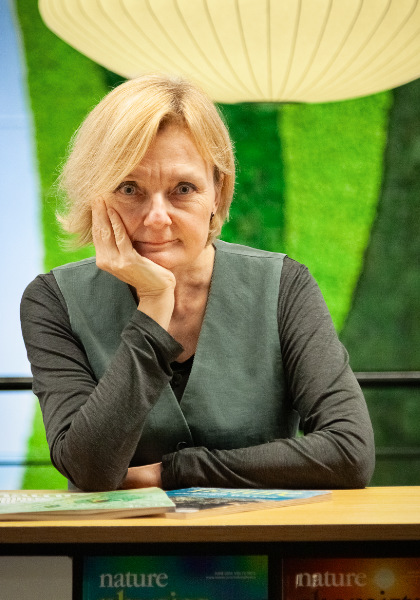
The story that you tell needs to be substantiated and you need to provide robust evidence to support your claims.
#2: Show why your findings matter beyond your field
Nature is a multidisciplinary journal. Individual papers do not have to combine several disciplines, but editors will consider whether research implications extend beyond an immediate field. A genetics paper, for example, might also matter to researchers studying disease, population history, archaeology, anthropology or linguistics.
Editors therefore consider “to what extent a paper informs other disciplines.” A paper can represent a fundamental advance for a particular research community and still fall short of Nature’s remit. “It might not be a Nature paper because it’s specific to the community,” Skipper explained.
#3: Be clear about what is genuinely new
Beyond a certain openness to other disciplines, another aspect that Nature editors will look for in a first pass is the novelty of the research findings. As experts in their respective fields, the editors will assess this claim by surveying published literature.
What kind of novelty is Nature looking for? Skipper emphasized that there is no single answer – and that a Nature paper does not necessarily have to explain a new mechanism. “There is a perception that if you don’t have a mechanism, you can forget about Nature. There’s not even a point submitting. That’s not true. It hasn’t been true ever. It depends on the discipline.”
As an example, Skipper pointed to the Human Genome Project; the efforts of the public consortium were published in Nature. The original genome sequence offered no mechanism and, in itself, no biological insight, yet it proved transformational for a number of disciplines. “The novelty in that paper came from the potential, the opening of opportunities that it provided.” Other “grand” examples of novelty she cited included the publication of AlphaFold, an AI tool developed by Google’s DeepMind, which revolutionized the way structural biology is done. Or the first paper to use data from Facebook that turned out to provide evidence that political decisions can be influenced by social media interactions.
Novelty, in other words, can lie in a new discovery, or in tapping into new datasets, but also in what a piece of research suddenly makes possible.
#4: You don’t have to do everything a reviewer asks
Once a paper has passed the initial editorial assessment and entered peer review, authors may challenge reviewers’ requests. “It doesn’t just mean that you have to do every single thing that a reviewer says,” Skipper said. “You can push back and you can say, well actually this is a misunderstanding.” Sometimes, suggested changes might go beyond what is necessary to substantiate the conclusions. “That is a good question, but that’s a question for another paper” can be a perfectly legitimate response to such claims, she noted.
The deciding issue should be whether the claims made in the manuscript are sufficiently supported by the evidence provided. “If they are supported, then all the other questions and suggestions from the reviewers are nice to have and should really be at your discretion.” A good editor, Skipper added, should help distinguish between revisions needed to support the paper’s conclusions and requests that would extend the work further.
#5: What to leave out of your cover letter (and how to get it right)
First up, a cover letter is not required. “Your research might speak for itself,” Skipper noted. “But if you submit a letter, make it readable.” Crucially, a cover letter can provide useful information for the editors, such as identifying direct competitors who may be unsuitable as reviewers, or pointing out related unpublished work or papers submitted elsewhere. It can also add context, particularly for a multidisciplinary journal such as Nature.
“However,” she noted, “there’s not much point in repeating what is said in your introduction or your discussion in the paper.” Even less helpful would be “an endorsement from a named person, a prominent scientist in that specific field.”
Skipper emphasized that authors should use the cover letter to explain why their work deserves the editor’s attention and what makes the advances in research particularly significant. She suggested a relatable exercise: imagine explaining the work to a friend who is also a researcher, but not necessarily an expert in the same field. “How would you convince them that the work that you’ve just done is really damn good, it’s really cool, it’s really important?”