Negotiating When the Stakes Feel Real
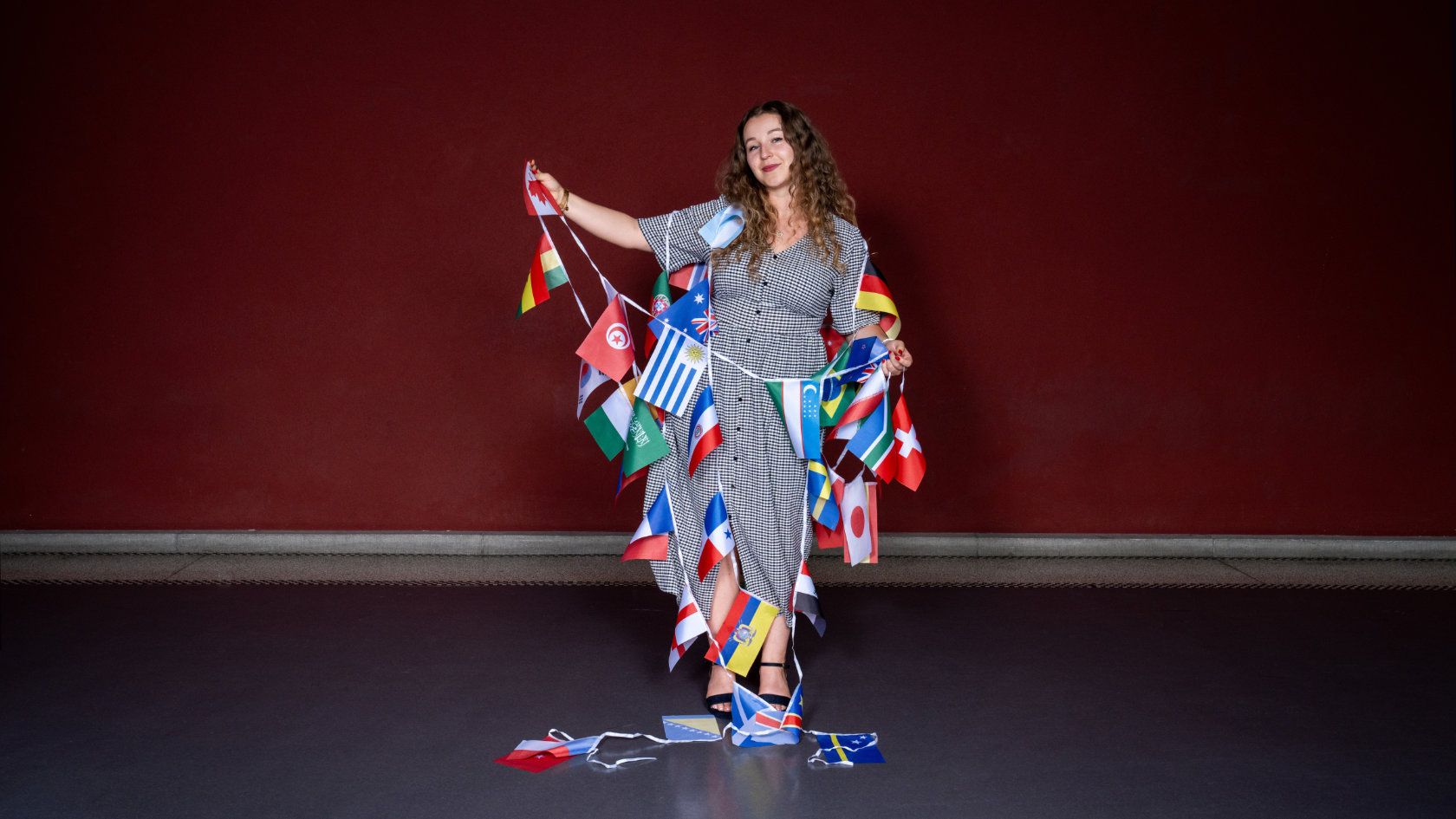
The organizers had made their decisions, and the roles were handed out: Serena Schurter would represent Nigeria. The UZH student first had to do her homework: capital Abuja, official language English, 230 million inhabitants. Now, together with two other students, she was tasked with representing the country’s interests in an international negotiation. More specifically, this meant negotiating the annex to the WHO pandemic treaty to ensure that during the next pandemic, countries in the Global South won’t be left waiting for vaccines and other medical aid.
This negotiation scenario, which was simulated at an international summer school at the University of Zurich in July, was a realistic one: at that very moment, WHO delegates were convening in Geneva to debate exactly the same issue. At the same time, Schurter was in Zurich, stepping into the role of lead negotiator for Nigeria. She delivered statements in the plenary session and coordinated with other countries. A French political science student and a German psychology student were also part of her negotiation team.
Learning by doing
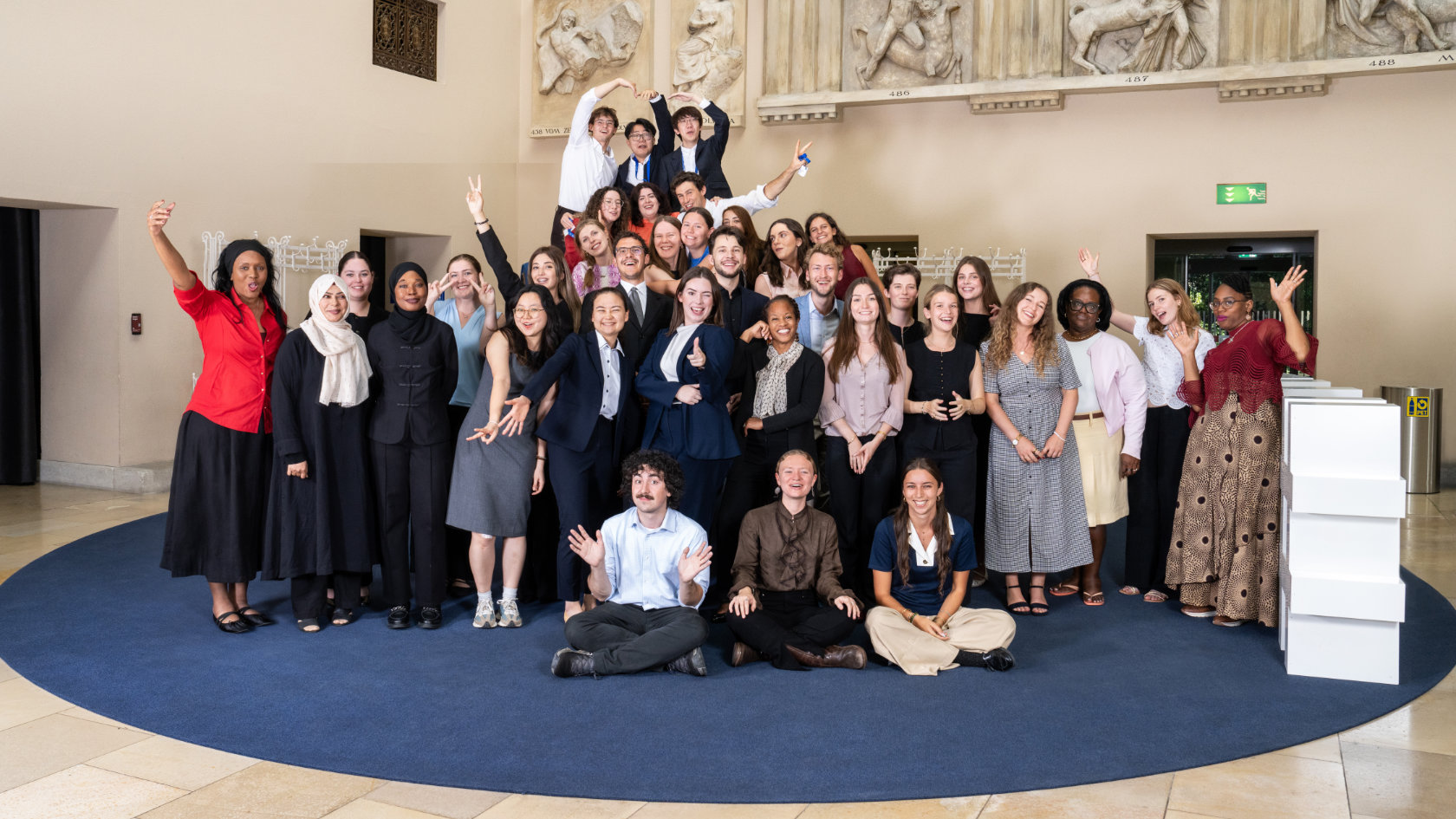
A total of 45 students took part in the summer school – six from UZH, with the rest hailing from other Swiss universities and from about a dozen countries worldwide. The five-day event was as international as possible, from the topics under discussion to the use of English for instruction to the participants themselves. The students were joined by instructors from various universities as well as practitioners with negotiation experience – including a former Afghan health minister and former ICRC staff. “It was very enriching to hear about their experiences,” says Schurter.
-
 Listening, understanding, debating and finding a compromise: This year’s Global Negotiation Academy was held at UZH in July. (Images: Diana Ulrich)
 -
 The path to mutually acceptable solutions is long and exhausting – even when the negotiations are simulated, like at the UZH summer school.
 -
 Corridor diplomacy between plenary debate sessions also plays a big role in successful negotiations.
 -

-

-

-

-

-

The 25-year-old Schurter is studying for a Master’s in Political Science at UZH with a concentration in international relations. She has wanted to work in this field since she was young, so she was thrilled when UZH offered several negotiation modules in the spring semester: “Negotiations are essential for concluding treaties between countries or within international organizations and for resolving conflicts.” While her modules covered the fundamentals of these kinds of negotiations, Schurter saw the summer school as the icing on the academic cake – an opportunity to learn even more over a five-day period and apply her knowledge in a full-day simulation.
Useful in every field
The summer school was founded by political scientist Jack Williams, who teaches negotiation and conflict resolution at UZH and other universities worldwide. While a student at the University of Bern, he took part in a similar simulation, which inspired him to found an association in 2014 to offer an annual summer school on international negotiations. Today, the association goes by the name Institute for Global Negotiation.
Jack Williams’s contact with his former doctoral thesis supervisor, Francis Cheneval from the Chair of Political Philosophy at UZH, led to the annual summer school being held at UZH since 2020. This year, it was run for the first time as an official UZH course offering ECTS credits in the form of a Blended Intensive Programme (BIP). BIPs are hybrid exchange formats jointly organized by a consortium of several European universities; they combine short periods of in-person contact with virtual components.
Williams continues to develop the course in tandem with Stefanie Walter, professor of international relations at the Department of Political Science at UZH. This innovative teaching format is supported by the UZH Teaching Fund and the Swiss-European Mobility Programme (SEMP), which is Switzerland’s version of the Erasmus+ program.

Being able to negotiate and resolve conflicts is useful for everyone, whether at the workplace or in their private lives.
Currently, the program mainly attracts political science students from around the world. “But we want to reach even more students from other fields,” says Williams. “Being able to negotiate and resolve conflicts is useful for everyone, whether at the workplace or in their private lives.” In addition to political science, fields such as psychology and law also offer insights into how negotiations can achieve maximum success. In the future, the Global Negotiation Academy aims to become more interdisciplinary, drawing on the broad expertise available at UZH.
Becoming culturally sensitive
Careful listening is essential in an international environment. That’s why the Global Negotiation Academy fosters the capacity for self-reflection and emphasizes sensitivity to cultural differences. Very different meanings and values can be embedded in people’s statements depending on their cultural background. “We want to teach students how to recognize this. In our globalized world, it’s a lesson that’s becoming increasingly important in many professional contexts,” says Williams.
“Communication is the bedrock of negotiation,” says Schurter. “But listening skills are even more important than speaking persuasively. The better you understand the counterparty in a negotiation, the easier it is to respond appropriately and find shared solutions.” This also means that participants need to build trust in each other – something the various workshops, walks and shared meals at the summer school helped facilitate.
Last-minute compromise
“Compared to a semester-long course, the summer school experience is much more intense, which reflects the reality of negotiations more closely,” explains Williams. Schurter confirms that this matched her experience: “The days were long, you’re constantly together with your team, and you’re trying to remember and apply everything you’ve learned. That was already a challenge. On top of that, we were under time pressure, because after a day of negotiating we wanted to be able to show results.”

Stepping into someone else’s shoes was an exciting challenge.
This likely contributed to the delegations being willing to compromise on an agreement at the last minute. In real-world negotiations, this isn’t necessarily the case, as talks are often extended. Indeed, the WHO delegates at the actual negotiations taking place in Geneva at the same time did not reach an agreement and decided that further meetings would be necessary.
Meanwhile, the Nigerian delegation fronted by Schurter and her classmates in Zurich was satisfied with the outcome of the mock negotiations. Their agreement stipulates that during a pandemic, pharmaceutical companies would give away part of their vaccine and medication stock for free while selling the other part to countries of the Global South at a discount.
“The summer school was a valuable deep dive into the world of international relations. Stepping into someone else’s shoes was an exciting challenge. I had to try to see things from the cultural and political perspective of a country that I was unfamiliar with,” summarizes Schurter. For her, an internship with the Federal Department of Foreign Affairs would be an ideal next step in her career.
Williams, meanwhile, hopes to integrate international negotiations even more into teaching and research at UZH. “Who knows?” he says. “Maybe UZH will even become a genuine center of excellence for negotiation.”
Internationality in Studies
There are a growing number of ways for students to gain international experience as part of their degree program at UZH. The most important opportunities include:
- Physical mobility programs such as exchange semesters, research stays and short programs (summer/winter schools, BIPs, etc.). They allow students to get to know international higher education and research cultures and to strengthen their intercultural skills. The Global Student Experience office provides comprehensive advice and support to students planning and organizing a stay abroad.
- Virtual and hybrid exchange formats: Online formats such as Cooperative Online International Learning (COIL) provide students with intercultural experiences and insights into different perspectives via the digital or hybrid space. Some COIL-based courses also include a short in-person phase at a partner university. On-site courses can also provide international experiences, for example, by connecting digitally with experts from abroad, or by working on case studies from other cultural contexts.
- Joint and double degree programs: Programs such as the Una Europa Joint Bachelor of Arts in European Studies (BAES) and the Bachelor in Sustainability (BASUS) allow for structured international studies with a degree awarded jointly by several universities.
Support for Teaching Staff
UZH supports committed instructors in developing new teaching formats to promote intercultural experiences among students. Depending on the course format, different sources of funding are available for this purpose:
- University Teaching Fund “global_innovation” (ULF): The global_innovation funding line of the UZH Teaching Fund supports the implementation of projects that allow students to gain experience in internationalization at the module level (applications open until 15 September 2026). The program_innovation funding line makes corresponding collaborations at the study program level possible. Depending on the course format, funding from the ULF open_innovation line may also be available.
- Global Funding Scheme: The UZH Global Funding Scheme supports faculties, departments, and professional service units in developing and implementing joint initiatives with international partners
- Promoting BIP through SEMP: The Blended Intensive Programme (BIP) is a format that allows students and staff to gain international experience through cooperative teaching and learning exchanges. They are made possible by teaching partnerships within a consortium of several European universities. Since the Fall Semester of 2025, BIP funding can be combined with funding from the ULF global_innovation line. BIP funding can be requested through the Global Student Experience office.
- Continuing education: UZH offers didactica courses on the topic of internationalization in teaching; useful suggestions and tools can be found on the Teaching Tools platform.
- Exchanges between peers: UZH encourages members of the teaching staff to discuss their experiences. For example, the UZH Teaching Day, Wednesday 28 October 2026) will be dedicated to the topic of internationality in teaching.