Targeting Cancer Cells’ Metabolism
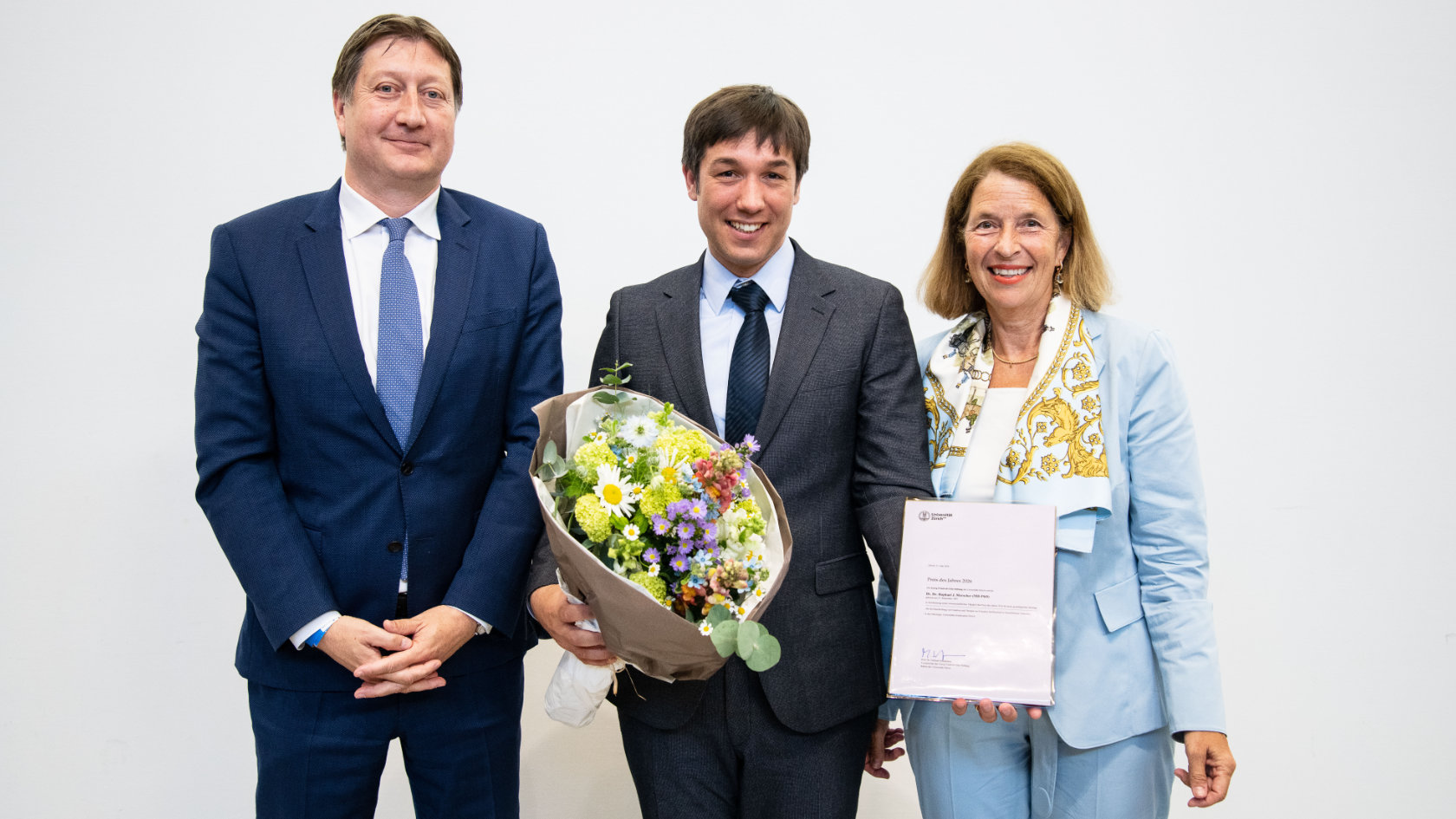
At the Day of Clinical Research at the University Hospital Zurich on 21 May 2026, the Georg Friedrich Götz Award was presented to Raphael Morscher. Morscher is a senior physician and research group leader at the University Children’s Hospital Zurich. His research focuses on the metabolic processes that cancer cells need in order to grow and on how these processes can be used therapeutically.
Raphael Morscher: Metabolism as a weak point in cancer cells
Cancer is one of the leading causes of disease-related death among children in Switzerland. High-risk diseases such as neuroblastoma are particularly difficult to treat. Neuroblastoma tumors arise from immature nerve cells, and around 15 to 20 children in Switzerland are affected by it each year. Despite intensive therapies, not all children can be cured in the long term.
Raphael Morscher and his team investigate which metabolic processes cancer cells need to grow. In their study, the researchers at the University Children’s Hospital Zurich analyzed the metabolism of high-risk neuroblastomas using high-resolution mass spectrometry. They found that the tumor cells depend heavily on polyamine metabolism. Polyamines are molecules that are important for the growth of immature cancer cells.
This dependency can be exploited for therapeutic purposes: The drug difluoromethylornithine, or DFMO, inhibits polyamine production. Morscher and his team were able to show that the drug’s effect is significantly enhanced when the amino acids necessary for polyamine production are simultaneously. In the study, this was achieved through a targeted diet or through externally administered enzymes that remove these building blocks directly from the bloodstream. As a result, the cancer cells experienced metabolic stress.
In the experiments, their growth was not only slowed down. The aggressive neuroblastoma cells also ceased their malignant program and underwent cellular differentiation. In other words, they developed more strongly toward mature nerve cells.
Building on these findings, Morscher’s team at the University Children’s Hospital Zurich is collaborating with international partners on a clinical trial to treat children with cancer. Raphael Morscher will continue to research cancer cell metabolism as part of the National Center of Competence in Research “Children & Cancer”.
The findings were published in the journal Nature and additionally featured on the cover and in an accompanying commentary.