How Words Create Worlds
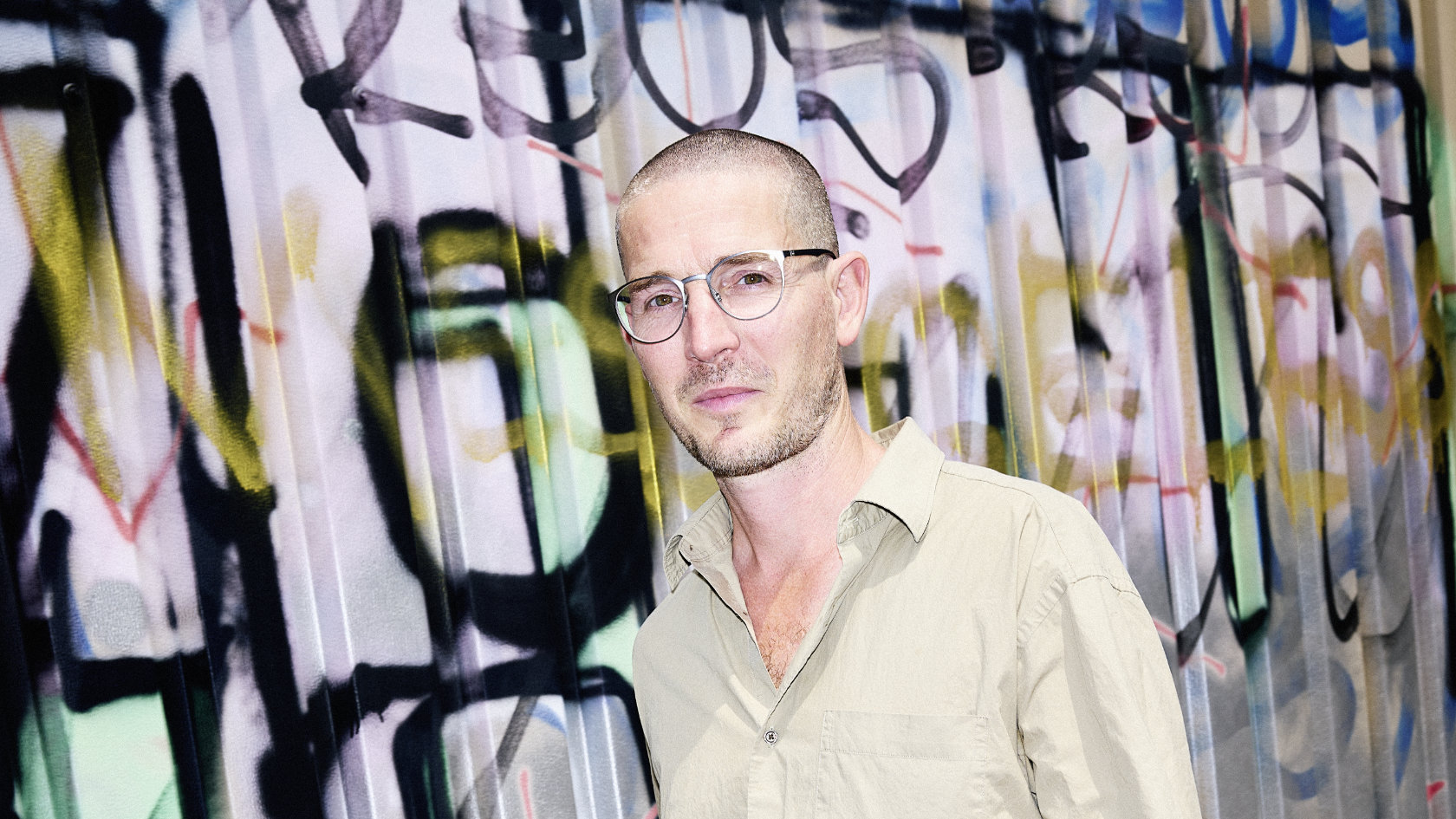
John Mansfield is sitting in his office in Zurich-Oerlikon, testing recording equipment. In a few days, he will depart for Papua New Guinea, where he plans to study Mum, a language spoken by a small Indigenous community. Once there, he will listen to, observe and record conversations. The foreignness of this endangered language is precisely what appeals to the assistant professor of anthropological linguistics. Things that are too familiar, Mansfield says, can obscure the structure of a language. His native language is English, and Swiss German, which was new to him when he arrived, is also part of the Germanic language family. Many features of these languages are so familiar to him, he says, that he barely notices them anymore.
It is a different story with the Indigenous languages of Papua New Guinea and northern Australia, where he has also done research. In these tongues, sentence structure, word order, and meaning can work in entirely different ways. “That forces me to question things I take for granted,” Mansfield says. He is not, however, searching for a supposedly “pure” language untouched by outside influence – a notion he considers misguided. Societies have always been in contact with one another, he explains, and their languages have influenced each other accordingly. Every language has its own history, according to Mansfield, and none is static.
A matter of sequence
The Australian-born Mansfield studies how languages change over decades and centuries, how certain words emerge from their social environments and how grammatical structures spread within language families. He is especially interested in how languages arrange words and their building blocks. Why does one word come before another in a sentence? What factors determine the word order? And why do speakers sometimes opt for different variations?
Different languages solve this problem in different ways. Yet a research project Mansfield took part in also uncovered shared principles: when words are modified, for example to form verb tenses, many languages make those changes at the same position within the word. The finding suggests that languages do not take shape at random, but that the human brain seems to produce them in similar ways all over the world.
When dog also means cat
Paying such close attention to linguistic details raises a larger question: what does language reveal about human thought? Mansfield and his team investigate how abstract concepts, such as ideas about spirituality, ethics and social relationships, have developed and spread over long periods of time. The researchers use statistical methods to analyze linguistic and anthropological data from hundreds of cultural groups.
One of his students, for example, is studying concepts of the soul in Papua New Guinea and the Pacific. Many languages in the region use a word that also means shadow. In European languages, by contrast, the concept of the soul is sometimes tied to breath, vapor or wind. To Mansfield, examples like these show that languages draw different connections between things, shaping how we make sense of the world.
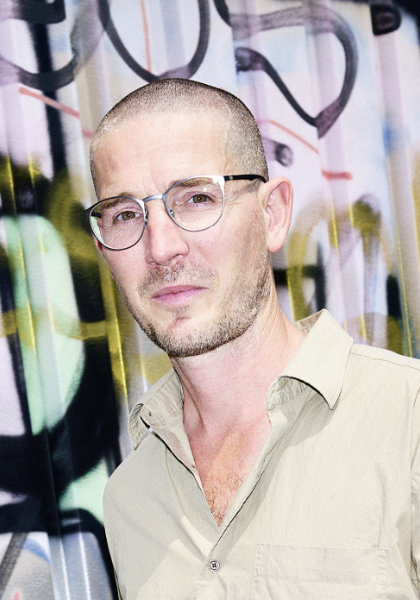
We tend to think that basic concepts such as ‘dog’, ‘hand’ or ‘sun’ are self-evident, universal elements of human experience. But when we study languages from different parts of the world, we find something else.
“We tend to think that basic concepts such as ‘dog’, ‘hand’ or ‘sun’ are self-evident, universal elements of human experience,” the linguist explains. “But when we study languages from different parts of the world, we find something else. There are languages in Australia and the Amazon region in which dog and cat are expressed by the same word—in other words, they are conceptualised as a single category.” Cultural habits shape how language is used, and those patterns in turn give rise to different grammatical structures.
The answers to Mansfield’s research questions can’t only be found at his desk – a lesson that was driven home during his doctoral studies. He originally set out to study how television was changing Murrinhpatha, the language of an Aboriginal community in northern Australia. The premise fit neatly with the globalization discourse from that time: the fear was that soon people everywhere would be watching the same TV shows, absorbing the same cultural influences and becoming increasingly similar. Then Mansfield arrived and discovered that many people there didn’t watch TV at all; they simply weren’t interested. He had to return to the drawing board for his research plan. However, this dead end turned out to be one of the most valuable lessons of his career. Mansfield learned how quickly assumptions can creep into research, and how essential it is to look and listen closely in the field.
Parallels with evolutionary thinking
Like all scientists, Mansfield builds on the discoveries of earlier generations. He points to several milestones in linguistics, such as the discovery of Proto-Indo-European: in the 18th and 19th centuries, scholars realized that many languages stretching from Europe to Asia are related and descend from a common ancestral language spoken roughly 6,000 years ago. The idea that languages can drift apart over long periods and still be related has parallels to evolutionary thinking, which was gaining ground at the same time.
Linguistics experienced another major leap forward in the mid-20th century. Formal models of language emerged alongside developments in mathematics, logic and computer science. These models made it possible to describe language more precisely, to formulate more rigorous hypotheses and to test them empirically.
Language and AI
Beginning in the 1980s, digitization transformed the field once again. Ever-larger collections of digital texts, or corpora, enabled quantitative studies on a previously unimaginable scale. The results of this basic linguistic research played an important role in the development of AI language models. At the same time, artificial intelligence itself is becoming a tool for linguistics. It relieves researchers of routine work such as digitizing historical glossaries. AI can search through enormous amounts of data and highlight linguistic patterns that humans might miss. The advent of artificial intelligence has raised a new research question of its own: might AI work similarly to human language processing?
At first glance, there are parallels. When someone starts a sentence and suddenly stops, we can often guess which word would have come next. To a certain extent, human language production can be modeled in terms of probabilities. That is essentially what large language models do as well: they predict the next word based on probability. But Mansfield cautions against jumping to conclusions. Similar results do not necessarily mean that the underlying mechanisms are similar. What goes on “under the hood” in humans and in AI, and where the two genuinely overlap, he says, remains an open question.
Freedom and accountability
For Mansfield, the rapid rise of AI illustrates why basic research matters, even when its future benefits often cannot be predicted. “At the time you’re conducting basic research, you simply don’t yet know what the outcome will be,” says Mansfield. Research, he says, should not be geared solely toward practical applications from the start. The priority must be to understand a subject as thoroughly as possible.
Mansfield is watching developments in Australia and New Zealand with concern, as funding for basic research there is becoming harder to obtain. He sees this as partly a sign of growing distrust toward scientific elites and concerns that researchers are using taxpayer money to study useless things. In his view, this is exactly why science must be transparent and accountable when it comes to use of public funds. What it shouldn’t lead to, he says, is funding only projects with a guaranteed return, as this would leave little room for unexpected discoveries.
The recording equipment in Mansfield’s office symbolizes this open-ended approach to research. In a few days, he will pack it for his trip to Papua New Guinea. He knows which questions he is taking with him, but the answers he will bring back are not yet clear. And that, for him, is the entire spirit of basic research.