The Two-For-One Master’s Degree

At the end of her Bachelor’s degree in law, Ellen Sutter made a decision. “I hadn’t yet gained any international experience, and I wanted to make up for that during my Master’s program. I wanted to immerse myself in another culture.” Instead of an exchange semester, she opted for a more comprehensive international study experience – a double degree program. UZH’s Faculty of Law has been offering this Master’s program format for about 20 years. It allows students to spend one year at UZH and one year at a partner university. Today, the faculty has agreements with 12 universities around the world.
Ellen Sutter chose to pursue a double degree at UZH and the University of Hong Kong. “I wanted to experience a completely different environment, outside of Europe.” And there were other, more personal reasons for choosing this destination: her mother is from China. Sutter didn’t grow up bilingual, but she did learn Chinese as a foreign language at school. Her time in Hong Kong was therefore an opportunity to gain a deeper understanding of her mother’s culture.
Choosing specializations
A double degree program lasts four semesters instead of the three typical of most Master’s programs. In exchange for the extra time they invest, students earn two degrees in parallel: a Master’s degree from UZH and a degree from the partner university – often a Master of Laws, or LL.M. for short. The LL.M. is particularly common in English-speaking countries, and lawyers typically earn it by completing a one-year postgraduate program. With the double degree program, this can be achieved in just one extra semester, even while students are still completing their regular studies.
A double degree boosts your chances on the job market.
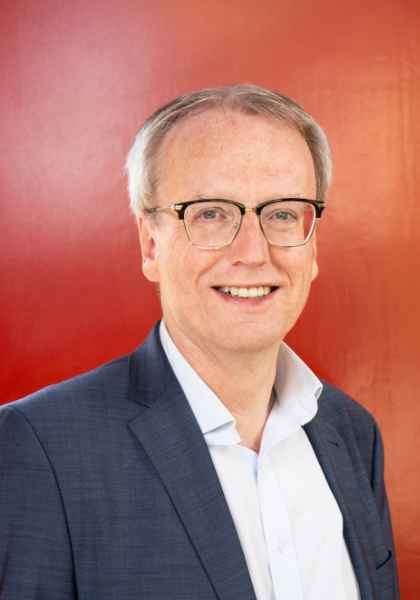
“A double degree boosts your chances on the job market, improves your language skills, and gives you the chance to become familiar with an additional legal system,” says Professor Andreas Heinemann, who was responsible for external relations at the UZH Faculty of Law until summer 2026. “Graduates don’t necessarily end up working in London or New York; they might, for example, work in Switzerland for companies or law firms with international operations. In those situations, good English skills are especially in demand.”
For Ellen Sutter, the double degree offered another advantage. Compared to the regular Master’s program, it allows students to focus more specifically on particular specializations. During the first year of the Master’s program at UZH, she focused primarily on humanitarian law and migration law. In Hong Kong, she wanted to take a different approach and concentrate on business and financial law. She has a strong interest in the intersection of economics and humanitarianism: how can economics promote peace? What role can factors such as economic stability or institutions such as the World Bank play? Hong Kong was an ideal choice for this. “The University of Hong Kong offers a wide range of courses in business and financial law. This is no coincidence – it’s because the city is a major international financial center,” says Sutter.
Different legal systems
The double degree program offered by UZH’s Faculty of Law is popular. Each year, 50 to 60 students choose this program. The most popular destinations for students from Zurich include London, Leuven (Belgium), Maastricht (the Netherlands) and New York. Meanwhile, 20 to 30 international double degree students come to spend a year at UZH annually. Partner universities are selected based on factors that include existing relationships with other higher education institutions.

“Above all, though, we ask students about their preferred destinations and then work to establish the corresponding agreements,” says Heinemann. To be accepted into the program, applicants must demonstrate strong language skills and a solid record of academic achievement.
For Ellen Sutter, Hong Kong was also an attractive place to study from a legal standpoint, as the city operates under multiple legal systems. As a part of China, Hong Kong is governed, to a certain extent, by Chinese law – but not entirely, as it is also considered a special administrative region. Because of its history as a British colony, the city still partly follows the British common law tradition, meaning court decisions play a particularly important role in shaping case law. This contrasts with civil law in continental Europe, which is more heavily shaped by jurisprudence. Lastly, international law plays a central role in the financial center. The double degree thus gave Ellen Sutter insights into the various legal systems of a city with a very diverse culture.
One very practical adjustment for Sutter, who was used to Swiss university timetables, was that many lectures were held in the evening, as they were aimed at working professionals. Her instructors came from Asia, as well as from Canada, the United States and the United Kingdom. Most of them only worked part-time at the university and, alongside that, held jobs in places like law firms or the financial sector. They incorporated a wealth of practical examples into their teaching. “In class, we often simulated client meetings by taking on the roles of lawyers,” Sutter says. During her academic year in Hong Kong, she also wrote several papers, including one on banking supervision in Hong Kong’s financial center.

She mainly connected with Chinese students at the student residence. “People who already had some international experience themselves were especially open,” Sutter says. “Before that, my only points of reference for Chinese culture were my mother and her relatives, whom we had visited a few times. Now I have Chinese friends my own age, which is very enriching.”
An advantage for those starting their careers
The year spent in Hong Kong made Ellen Sutter more open and self-assured, as she notes in retrospect: “I had to take care of everything myself in an unfamiliar place.” Since she had already completed her upper secondary school-leaving certificate bilingually in German and English, she was able to focus on improving her legal English while in Hong Kong. At the same time, she deepened her knowledge of the Chinese language.

The double degree offers students significant added value.
“The double degree offers students significant added value,” Sutter concludes. After her year in Hong Kong, she completed her Master’s program. She now works at a law firm in Switzerland that specializes in business law and, among other things, handles cases in Asia. It’s the ideal setting in which to apply the knowledge she gained in Hong Kong. Her next goal is to be admitted to the bar. “The fact that I already hold an LL.M. in addition to my UZH Master’s degree is a major advantage. This way, I save time and could, for example, start a doctorate right after my bar admission. Whether I’ll do that or not is still to be decided. But it would be a good opportunity to continue exploring the intersection between the world of finance and humanitarian law.”
Internationality in Studies
There are a growing number of ways for students to gain international experience as part of their degree program at UZH. The most important opportunities include:
- Physical mobility programs such as exchange semesters, research stays and short programs (summer/winter schools, BIPs, etc.). They allow students to get to know international higher education and research cultures and to strengthen their intercultural skills. The Global Student Experience office provides comprehensive advice and support to students planning and organizing a stay abroad.
- Virtual and hybrid exchange formats: Online formats such as Cooperative Online International Learning (COIL) provide students with intercultural experiences and insights into different perspectives via the digital or hybrid space. Some COIL-based courses also include a short in-person phase at a partner university. On-site courses can also provide international experiences, for example, by connecting digitally with experts from abroad, or by working on case studies from other cultural contexts.
- Joint and double degree programs: Programs such as the Una Europa Joint Bachelor of Arts in European Studies (BAES) and the Bachelor in Sustainability (BASUS) allow for structured international studies with a degree awarded jointly by several universities.
Supporting for Teaching Staff
UZH supports committed instructors in developing new teaching formats to promote intercultural experiences among students. Depending on the course format, different sources of funding are available for this purpose:
- University Teaching Fund “global_innovation” (ULF): The global_innovation funding line of the UZH Teaching Fund supports the implementation of projects that allow students to gain experience in internationalization at the module level. The program_innovationfunding line makes corresponding collaborations at the study program level possible. Depending on the course format, funding from the ULF open_innovation line may also be available.
- Global Funding Scheme: The UZH Global Funding Scheme supports faculties, departments, and professional service units in developing and implementing joint initiatives with international partners
- Promoting BIP through SEMP: The Blended Intensive Program (BIP) is a format that allows students and staff to gain international experience through cooperative teaching and learning exchanges. They are made possible by teaching partnerships within a consortium of several European universities. Since the Fall Semester of 2025, BIP funding can be combined with funding from the ULF global_innovation line. BIP funding can be requested through the Global Student Experience office.
- Continuing education: UZH offers didactica courses on the topic of internationalization in teaching; useful suggestions and tools can be found on the Teaching Tools platform.
- Exchanges between peers: UZH encourages members of the teaching staff to discuss their experiences. For example, the UZH Teaching Day, Wednesday 28 October 2026) was dedicated to the topic of internationality in teaching.