Cozzarelli Prize Awarded to Jordi Bascompte
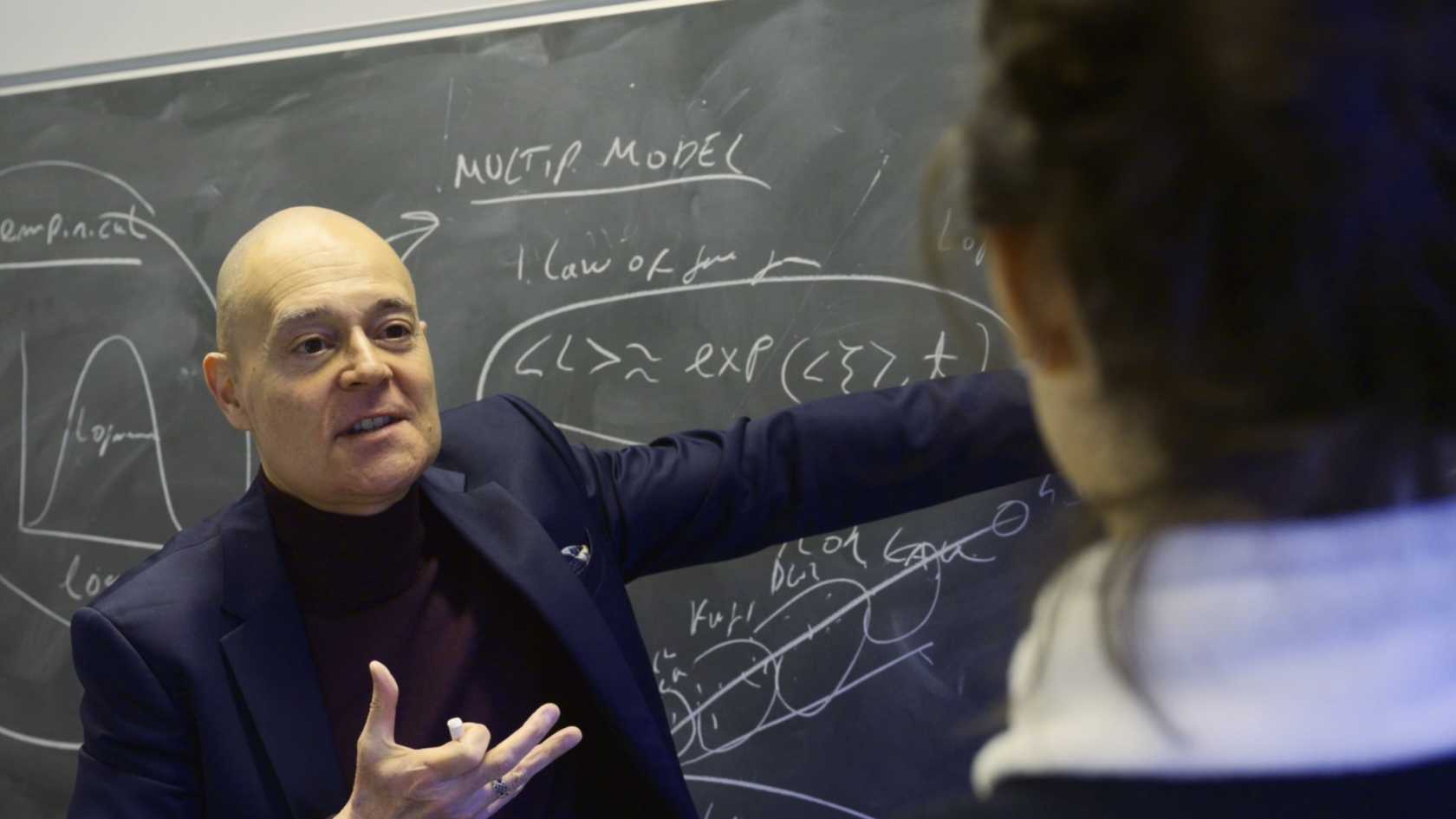
The Cozzarelli Prize recognizes outstanding contributions published in the Proceedings of the National Academy of Sciences (PNAS) journal. In particular, the prize acknowledges “scientific excellence and originality.” The paper The emergence of eukaryotes as an evolutionary algorithmic phase transition was selected from more than 3,600 research articles that appeared in PNAS in 2025. The award was presented to Bascompte and his co-authors Enrique M. Muro, Fernando J. Ballesteros and Bartolo Luque in biological sciences category.
A riddle of evolution
With this work, the UZH researcher and his colleagues shed light on one of the greatest riddles of evolution: how multicellular organisms could have emerged in the first place. Based on an analysis of the genes and proteins of more than 6,500 species, their paper demonstrates that the transition from simple prokaryotes to eukaryotic cells corresponds to a phase transition that can be described mathematically.
“In biology, we tend to think in terms of gradual processes,” Bascompte explains. “But we found nothing of the sort.” In one of the most significant steps in evolution, cells appear to have evolved abruptly from simple prokaryotes to fully developed eukaryotes.
Read more about Jordi Bascompte’s research: “How Did Complex Life Evolve?”