Researching on Equal Terms in the Amazon
“Every time we enter the primeval forest, we come out with something new,” says Rodrigo Cámara-Leret, a professor in the Department of Systematic and Evolutionary Botany at the University of Zurich. He grins at his PhD student Juan Carlos Copete. The two are a seasoned team: they conducted field research together for the first time 14 years ago on a quest to discover new palm species and have been working in the same department since 2023.
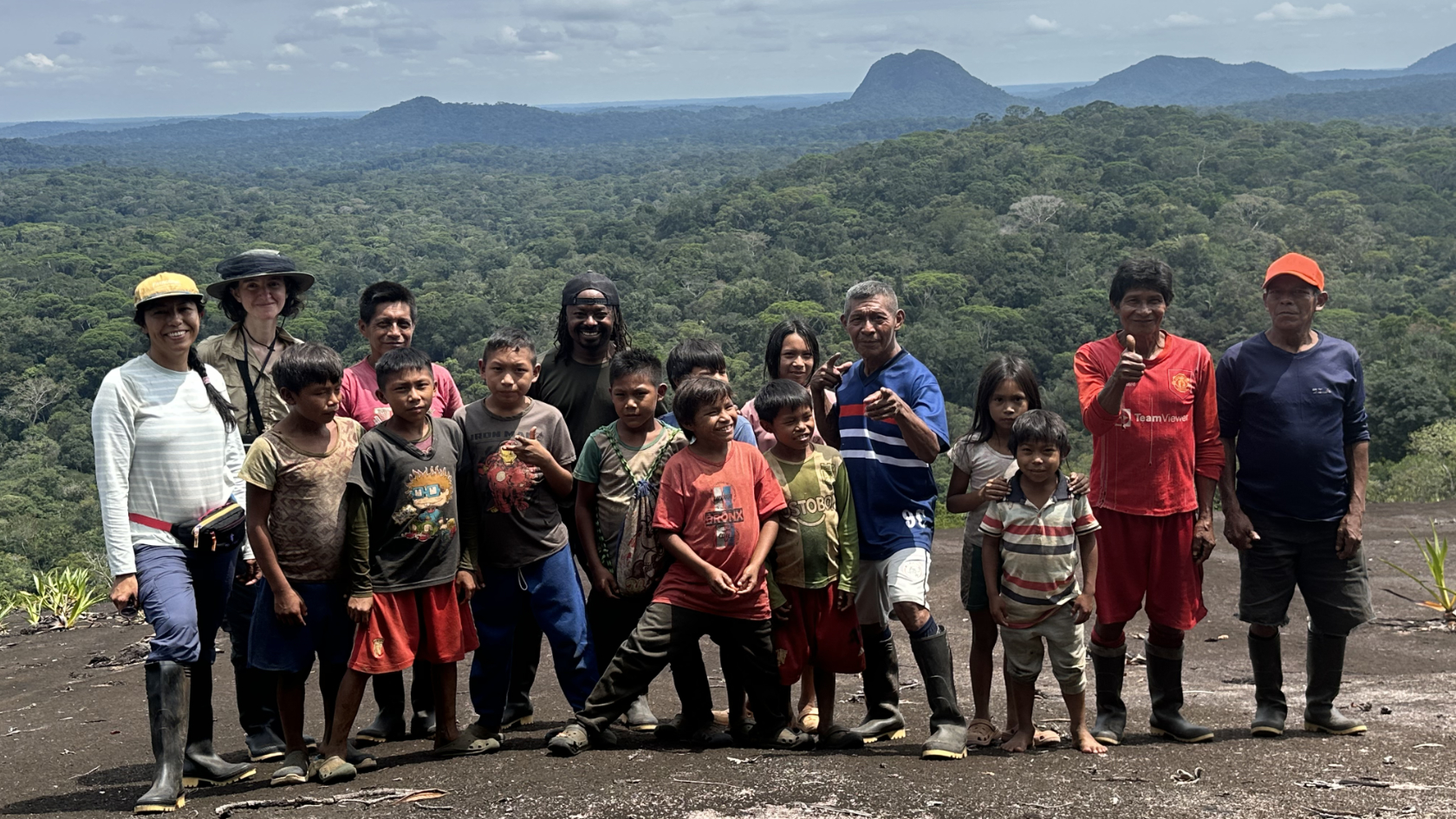
Last year, the two again returned from the ancient woodlands of Colombia with a treasure in hand: a new palm species that had never before been described. It bears the name Attalea táam and grows around the area inhabited by the indigenous Cacua community in Wacará in the department of Vaupés in southeastern Colombia. It takes a long boat ride followed by roughly a two-hour hike to reach the region.
A chance discovery
“Our discovery of the new palm species was a pure coincidence,” Copete laughs. “A tip from a local professor brought the Cacua community to our attention, so we traveled over there.” The Cacua live in the heart of the primeval forest near Colombia’s border with Brazil, he says. The approximately 200 people in the community have little contact with the outside world and speak their own indigenous language.
The Cacua welcomed the two researchers with a light meal in which palm fruits unfamiliar to them were served. When the researchers asked questions about the fruit, someone opined that the plants were probably farmed. Direct contact with the Cacua later revealed that the palms that bore the fruit actually grew in the wild in the community’s nearby surroundings.
Close cooperation with indigenous people
From that moment on, there was no stopping the two researchers’ scientific curiosity. Together with Cacua elders and a young hunter, they located the palm populations growing in the wild in the forest and collected and documented plant matter. “The palm fruit is an important food for the Cacua, and they use the palm leaves to thatch their barns. They knew exactly where the individual trees stood and how much fruit they could harvest without endangering the palm population,” Cámara-Leret explains.
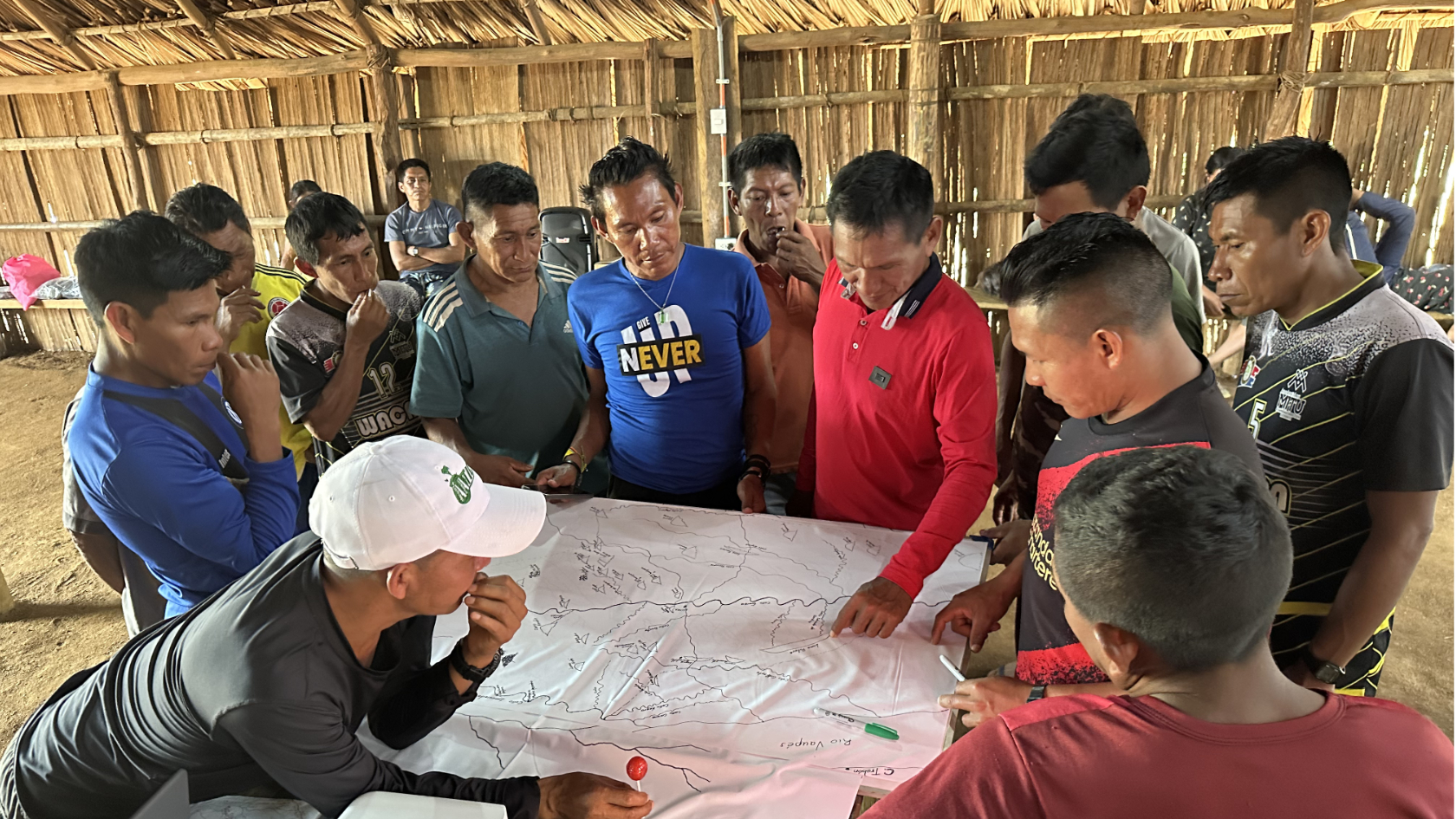
After returning to Zurich, the researchers analyzed the morphological traits of the palms and their fruit in detail, examined their flowers with the aid of digital microscopy and consulted scientific literature. Meanwhile, the Cacua continued to work on site: they mapped the tree population distribution on their own, photographed locations and documented soil conditions.
Most frequently occurring canopy palm in the Amazon
.jpeg)
The genus Attalea ranks among the most frequently occurring canopy palms in tropical lowland Amazon rainforest. However, its various species are hard to identify because they exhibit considerable morphological differences within a single species and most of them have male and female inflorescences, but also hybrid ones.
The new species Attalea táam, named after the Cacua word for the palm, is recognizable by the pronounced orange-brown ring-shaped leaf scars on its tree trunk. The palms can grow to a height of up to 23 meters. They are topped by a crown of erect leaves up to 12 meters long. Their ovate-shaped fruit has a yellowish-brown color and a brown apex. It has to ripen for around a year to become edible.
Local peer review
The two researchers emphasize that the intercultural cooperation with the Cacua enabled them to survey the region’s species diversity much faster than otherwise would have been possible. “It was a milestone for us. We had a unique opportunity to do science a different way by actively integrating the local community in the project,” Cámara-Leret says. The Cacua likewise appreciated the cooperation and got actively involved. “They were proud to pass on their knowledge to us and at the same time wanted to learn from us,” Copete adds.
It was thus important to the researchers to let the indigenous community also share in the results of their collaboration. Back in Colombia once more, they constructed a map of the entire region together with the Cacua and a Colombian artist, and they let local schoolchildren draw the individual symbols on it. The map and the study translated into the Cacua language were presented to the community. “We insisted on a local peer review to show the Cacua how valuable their input and feedback are,” Cámara-Leret says. “Unlike in Humboldt’s age, we didn’t want to tap indigenous knowledge without giving something back,” he explains. The map, on which the Cacua now see the names of their rivers, hills and plant species in writing for the very first time, is one such shared result.
Satellite imagery as a future project
As a researcher, one also learns a lot about the indigenous people’s culture and living conditions, and grows through mutual dialogue and reciprocity, Cámara-Leret says. The professor and his PhD student want to continue on the path embarked on with the Cacua. Their next project is to take satellite images of the region to give the Cacua a bird’s-eye view of their surroundings. “That’s the beauty of science: if you’re open to the unexpected and take the necessary time, you’ll be richly rewarded,” he sums up.