“I missed China’s speed”
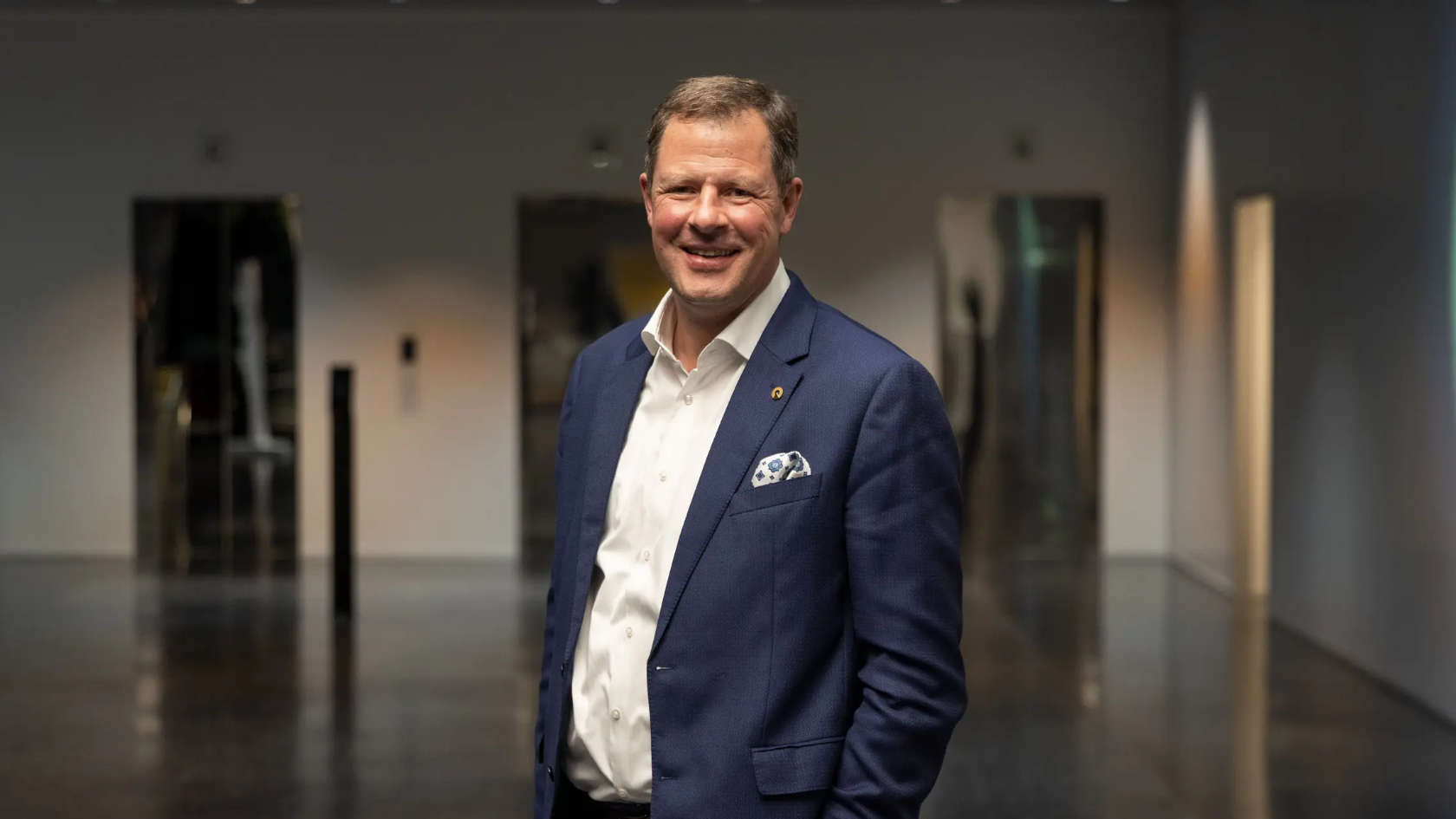
Thomas Oetterli studied Business Administration at the University of Zurich and spent much of his career with elevator manufacturer Schindler, including several years in China. Until the end of October, he serves as Chairman of the Board and CEO of Rieter, the Winterthur-based textile machinery manufacturer. In this interview with UZH Alumni, he explains why practical experience and time abroad are invaluable for students, reflects on the rapid pace of change he encountered in China, and discusses why innovation remains the key to the success of Swiss industry.
UZH Alumni: During your studies in Business Administration at the University of Zurich, did you already have a clear career goal in mind?
Thomas Oetterli: I always knew I wanted to go into business. That is why I chose a business-focused high school track. I was interested in subjects such as accounting and business management from the age of 13. Even during my first summer jobs, it was clear to me that I wanted to build a career in business.
What really motivated me was the desire to shape things and make a difference. I saw a company as a place where I could have an impact and help drive change. Of course, at that stage I had no idea what a CEO actually does.
I believe it is important to gain practical experience alongside academic study.
You worked for Telekurs and Schindler while still a student. Would you recommend that students gain professional experience early on and include a study-abroad semester in their education?
I believe it is important to gain practical experience alongside academic study. It does not necessarily have to be related to your field of study. What matters is learning what it means to work. In my view, someone who has only experienced school and university until the age of 25 is not yet fully prepared for professional life.
Spending time abroad also broadens your horizons and pushes you out of your comfort zone. The specific country is not all that important. Even spending time in the French-speaking part of Switzerland can have the same effect. What matters is leaving your familiar environment, becoming self-reliant, and being exposed to different cultural perspectives.
You started your career at Schindler in finance before taking on a range of general management positions. Is a finance background a good starting point for a leadership role with broader responsibilities?
A finance background helps you understand the business as a whole. Every leadership role involves achieving objectives, which means you need to understand the numbers and know how to influence them.
However, that alone is not enough to assume overall responsibility for a company. A finance professional, for example, also needs an affinity for sales or technology. Conversely, someone coming from sales should have a solid understanding of finance. It is the combination that matters.
When I moved to China, I shared the common Swiss perception that China stood for low costs and poor quality.
You led Schindler’s business in China for three years. What had the greatest impact on you during your time there?
Like many Swiss people, I went to China with the preconceived notion that it stood for low costs and poor quality. Once I arrived, that assumption was quickly proven wrong. China is not only incredibly large; it also possesses a tremendous depth of knowledge. In the West, we have underestimated China for decades.
What impressed me most was the pace. One year in China feels like five years in Europe. After returning home, I actually missed that “Chinese speed.” In fact, readjusting to Europe was almost more difficult than adapting to China in the first place. The experience showed me how much can be achieved in a short period of time, and it has had a lasting influence on me.
Our ability to innovate is our key competitive advantage.
Rieter operates globally. Which functions are particularly well suited to Switzerland today and in the future?
In my view, there are two types of functions that should be based in Switzerland. The first are governance-related functions. Larger publicly listed companies are subject to numerous regulatory requirements. Functions such as Legal, Corporate Marketing and Communications, and financial consolidation should therefore be centralized at headquarters.
The second relates to innovation. Switzerland is one of the most innovative countries in the world. We benefit from outstanding universities, including ZHAW here in Winterthur, as well as the University of Zurich and ETH Zurich, which produce highly qualified graduates every year. Innovation is a key differentiating factor for a Swiss company such as Rieter. For that reason, innovation, core know-how, and the development of key components should continue to be based in Switzerland or elsewhere in Europe.
How do you protect your most important innovations when patents often provide only limited protection?
We consistently enforce our intellectual property rights and patents. When we discover that someone is attempting to copy us, we take legal action. Today, it is much easier to enforce intellectual property rights in China and India against local competitors than it was ten or twenty years ago.
At the same time, innovation is a continuous process. You cannot invent something once and then rely on it for the next twenty years. Competitors will always try to work around patents and develop similar solutions. In China, there is a saying: “You should be happy. We only copy good products.” In that sense, being copied is also a sign that you have developed something valuable.
In addition, there are areas of product development that we consider core know-how and deliberately keep in Switzerland or Europe. We protect this knowledge not only through patents, but also by ensuring that certain products or components are manufactured exclusively here.
What role does the University of Zurich play for you and for Rieter today?
The University of Zurich is, of course, extremely important to me because I studied there. I learned a great deal and have very fond memories of my time as a student.
For Rieter, close ties with universities such as the University of Zurich and ETH Zurich are also a major advantage. We can collaborate on research projects and attract outstanding interns. Many of our employees in business-related functions are graduates of the University of Zurich as well.