Understanding China
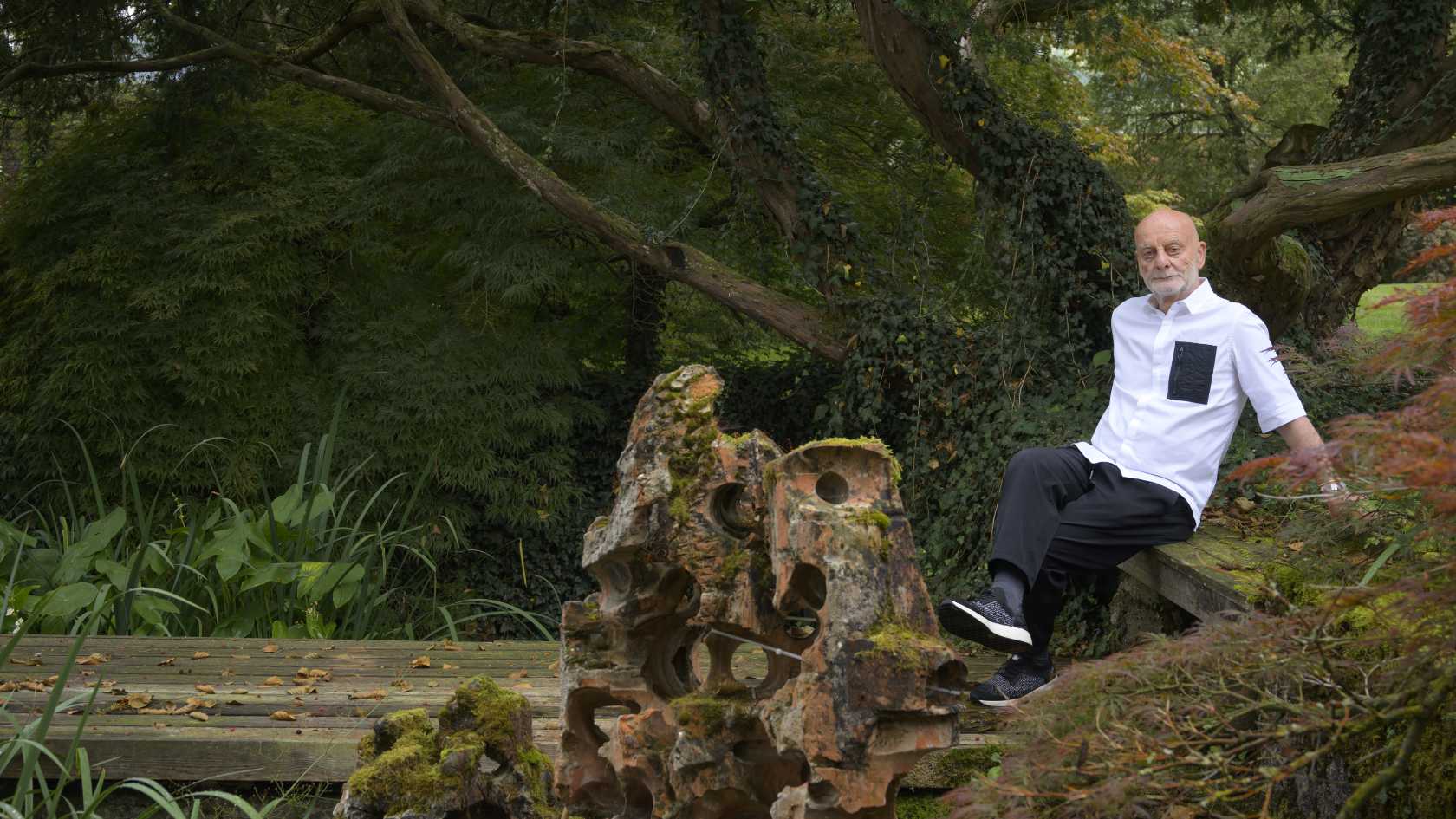
Once an elite athlete, journalist and diplomat, and now international businessman, castle owner and advisor to key contemporary art museums, Uli Sigg has worn many hats. But he’s best known as one of the world’s foremost experts on Chinese society and the most influential collector of Chinese contemporary art. Asked what lies behind such an unusual career path, Uli Sigg admits: it wasn’t long-term planning. “It was more a matter of opportunities presenting themselves – and me seizing them.”
His eagerness to accept new challenges has always been a driving force throughout his life. “So that I keep learning and don’t grow complacent,” he says. The opportunity that would shape his life most profoundly came in the 1970s. At the time, the Ringier media group had hired him as a business journalist because of his contacts in the Middle East – despite his lack of experience in journalism.
He then came to the notice of Lucerne-based elevator manufacturer Schindler, who were hoping to expand in the Middle East after the oil crisis. “No one really understood the region back then,” Sigg recalls, “so my knowledge was in demand.”
“‘An economic madness”
Sigg joined Schindler, and when a Chinese delegation arrived at the end of 1978 with a request to set up a joint venture, he was ready for the next adventure. “At the time, it was sheer madness,” he remembers. “Hardly any company dared to send money and modern technology into China.”
Across the table, he faced Chinese government officials who had no concept of entrepreneurship or a market economy. “There was no law specifying what a company was, what governance looked like, or how the finances of a joint venture should be settled. I had to get it all defined in complex negotiations.”
This was when the traits he had developed as a young rower helped him: the ability to stick to something and keep a clear eye on the finishing line. “I knew that whoever signed the first joint venture would succeed, because the model simply wouldn’t be allowed to fail.” For China, opening up to the world economy and gaining access to Western companies was too important.
Art as a way into society
At the time, China was completely unknown territory to Sigg. “To be honest, I didn’t know a thing about China.” He quickly realized that the Chinese approached problems in a very different way than he was used to. “In the first negotiations, my Western colleagues often assured me I’d made brilliant arguments,” he says. “But I noticed the Chinese weren’t following my line of thought. They were coming from a different angle, focusing instead on the people involved, and how each of them was connected to the problem.”
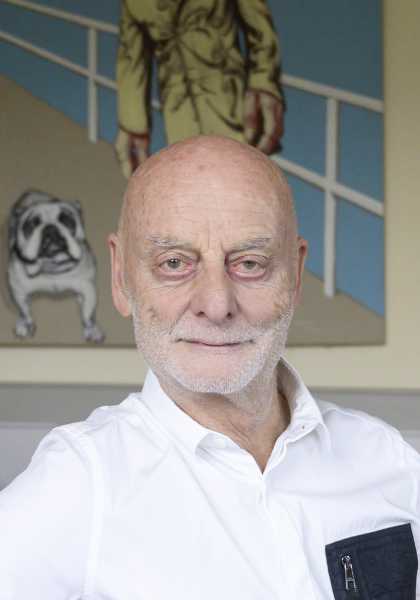
Whatever you feel about China, this art matters.
In his attempts to understand Chinese society beyond the negotiating table, Sigg turned to contemporary art – a passion he had first discovered as a student at UZH. Art intrigued him because it always explores the society of its time. “I was looking for ways to learn more about China, and I thought that connecting with Chinese artists might help,” he explains.
But that hope was initially dashed. “I soon realized that what I knew as contemporary art didn’t exist in China.” The country had only just begun opening up, and artists had little room to work autonomously or gain access to contemporary Western art.
At the time, it was also unthinkable for Sigg to meet artists privately. “I was constantly under surveillance and always accompanied by Party officials.” As the businessman negotiating China’s first joint venture with a Western company – a matter of enormous importance for both sides – any contact with artists would have jeopardized the deal.
One Man Market
Only in the 1990s, after serving 10 years as vice president of the China Schindler Elevator Co., was he able to move more freely and seek contact with artists. “By then, I felt Chinese artists had developed their own language and were no longer producing art that merely echoed Western ideas.”
Sigg was one of the first to take an interest in this art, and he began buying up works. His only chance was directly from the artists themselves. There were no galleries, no museums, and no market for contemporary art – except for him. “For a time, I was the market,” he told Der Bund newspaper in 2016, on the occasion of an exhibition of his collection at the Kunstmuseum Bern.
But there was another reason these encounters mattered: “The artists passed on to me their understanding of China. And that went far beyond what their works alone could tell.” After all, it was China itself, Sigg says, that was always his true “subject of study.” Art was his way of gaining a better understanding of its society.
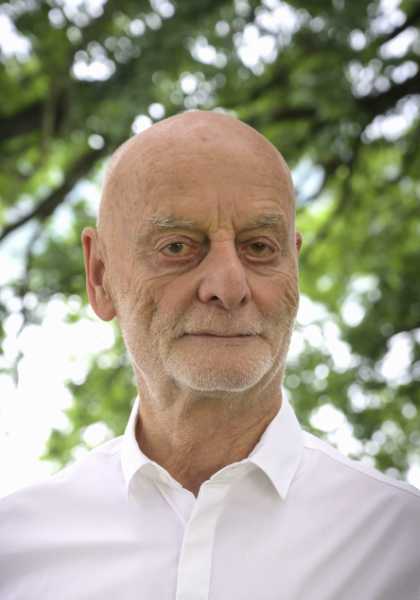
In rowing, you can’t give up, even when you’ve long since run out of oxygen.
In his role as businessman and diplomat, he mostly met members of China’s establishment. The artists, however, gave him entry into an entirely different world. “They lived in the humblest conditions, at the very bottom of society. Art was no way of making money,” he explains. Few people know China across all its social strata the way Sigg does – not only an observer, but also as a participating actor.
This, he says, enables him a completely different approach to understanding and evaluating contemporary Chinese art. It’s also what distinguishes him from other collectors, curators or art historians. “Because I engage with China’s business world and political system, I have a different perspective of their art.”
A nose for new trends
Now, approaching 80, Sigg is taking on a fresh challenge: teaching as a visiting professor at UZH. “I first had to ask how lectures even work these days,” he admits. He isn’t just a great collector of Chinese art – he’s also keen that the West engages with it. “Whatever you feel about China, this art matters.” He’s delighted that UZH has chosen to devote a course to it.
His own student days are long past. “I wasn’t the most diligent of students,” he recalls. Back then, rowing was his top priority, and at 23 he became Swiss champion in the men’s eight. Nonetheless, he earned a doctoral degree in 1976 with a dissertation on public law problems of cable television, once again stepping into uncharted territory. Coincidentally, his thesis came just as Switzerland’s first pirate radio stations were challenging the national broadcaster’s monopoly. “Before Roger Schawinski launched Radio 24 from Mount Pizzo Groppera, he asked me for a legal opinion,” Sigg says.
Again and again, Uli Sigg has been ahead of others and shown an uncanny sense for recognizing where promising trends are emerging – and seizing opportunities that open doors and take him further. Spotting opportunities is one thing; making something of them is another. What else it takes, he says, he learned from sport: “In rowing, you can’t give up, even when you’ve long since run out of oxygen.”