Plant Biologist Receives Award for Immune Research
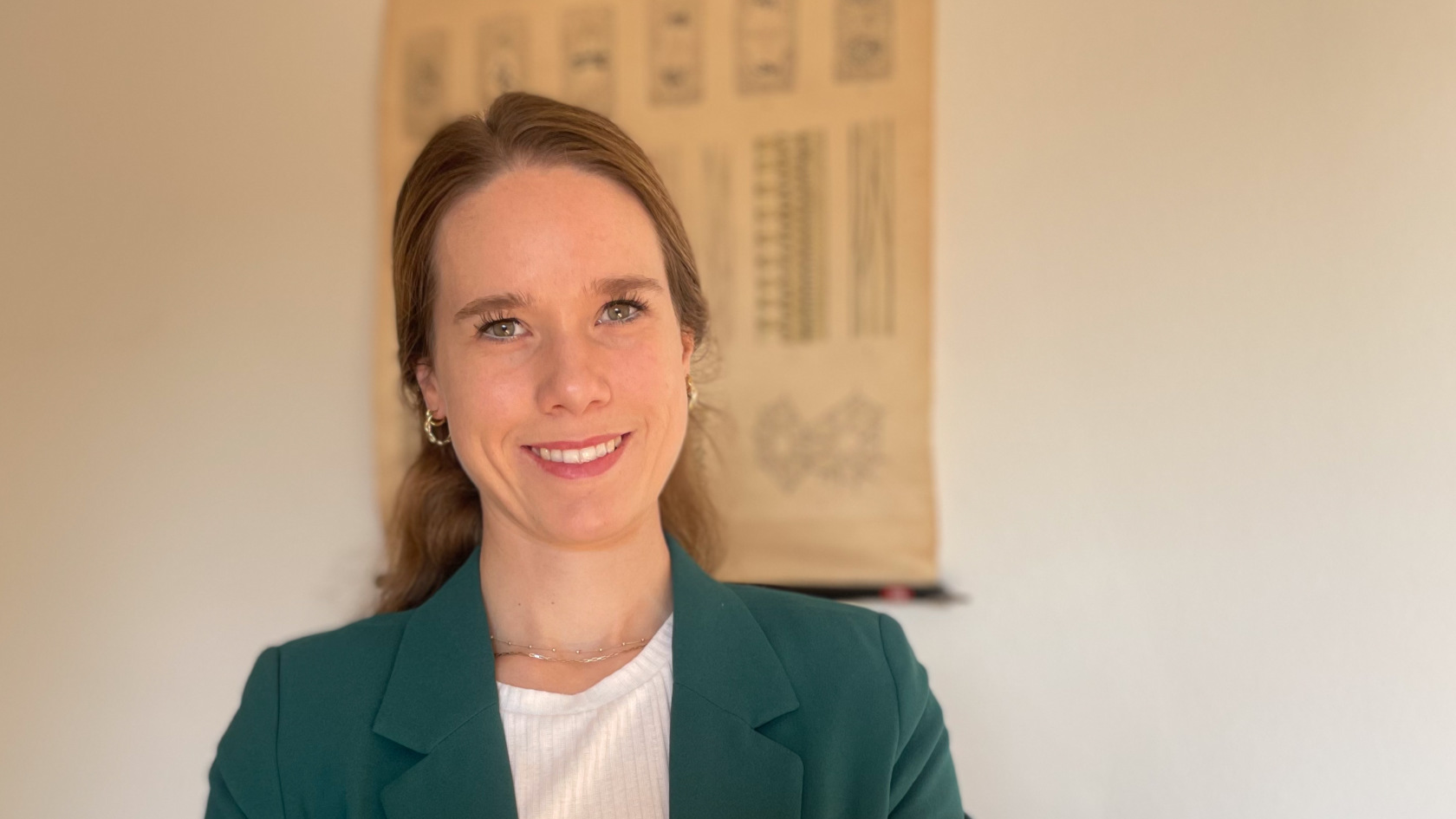
The For Women in Science Award has been awarded in Switzerland this year for the first time. What project did you submit to apply for it?
Jana Ordon: The project’s title is Breaking Walls, Sensing Threats: Elucidating Oligogalacturonide Perception in Plant Immunity. It’s about how plants detect attacks by pathogens.
Can you briefly explain the objective of the project?
Ordon: Unlike animals or humans, plants don’t have specific immune cells. In principle, any plant cell can initiate an immune response. In the event of an attack, on one hand, receptors on the surface of the cell recognize patterns of pathogens. And on the other hand, plants react to fragmentation of their own cell walls presumably caused by attacks by pathogenic bacteria or fungi. This has been known already for over forty years. But we still don’t know which receptors are necessary to trigger that immune response. The aim of the project is to identify those receptors and to better understand the signal transduction that occurs after cell wall fragments bind to the receptors.
Could this research contribute to rendering plants immune so that the use of pesticides can be reduced?
Ordon: My project involves basic research, but in the long term, receptors of that kind could become a target for deliberately triggering immune responses against a variety of pathogens. Then it would become possible to breed plants in a way that makes them immune to those pathogens.
About Jana Ordon
Jana Ordon earned her Bachelor’s and Master’s degrees in biology at Martin Luther University in Halle-Wittenberg, Germany. She then earned a PhD at the Max Planck Institute for Plant Breeding Research in Cologne. She has been working in the Department of Plant and Microbial Biology at the University of Zurich since February 2024 on a fellowship from the European Molecular Biology Organization (EMBO).
What do you especially like about this project?
Ordon: I have to elaborate a bit to answer that. During my studies, I already had an interest in genetics and in molecular interactions between plants and pathogenic bacteria. During my bachelor’s study program, I began to work on genome editing, excising specific genes from the plant genome. For my Master’s thesis, I conducted research on intracellular immune receptors. For my doctoral dissertation, I continued to work on plant immune responses, but shifted my focus from pathogens to bacteria called commensals, which have neutral or even beneficial interactions with plants. I want to gain a 360-degree view of the plant immune system inside and on the surface of cells in order to conduct long-term research into how not only pathogenic but also commensal bacteria interact with the plant immune system. This project fits in very well with that.
Are there also other aspects that enthuse you about this project?
Ordon: I really like that it involves good cooperation with research teams in Lausanne and Madrid. We have a common interest in this receptor and are trying to accomplish as much as possible together. The three laboratories each have their own strengths that we are able to combine.
You have received a For Women in Science Award for your project. What does that accolade mean to you?
Ordon: I, of course, feel very honored to have received the award, in part especially because it is not confined to biology, but also included the participation of women from a variety of different STEM subjects. I thus apparently came out on top out of a wider spectrum, which shows me that people are interested in my work. In addition, the award grants me money for my research, giving me a bit more freedom. Furthermore, the award gives me confidence with regard to an academic career.
For Women in Science Program
The 2025 Swiss L'Oréal-UNESCO For Women in Science program was jointly organized by the Swiss UNESCO Commission, L'Oréal Switzerland and the Swiss Academy of Engineering Sciences. It honors and supports female postdoctoral scholars in Switzerland who do outstanding work in STEM fields. Four grants, each amounting to 25,000 Swiss francs, were awarded in Switzerland for the first time this year.
The L'Oréal-UNESCO global For Women in Science program has been in existence since 1998. Under the aegis of this partnership, around 4,400 women have been honored since then for their contributions to scientific research.
Is a dedicated prize for women in science really needed at all?
Ordon: That’s a great question. I think a lot has changed and been done in recent years, but there is still a leaky pipeline, including in the field of biology: women make up more than 50% of the students, but the further one goes up the career ladder, the smaller the share of women becomes. A prize of this kind can raise awareness of this fact. Moreover, I believe that there is still an unconscious bias to ascribe men greater competence and expertise. Many of us have probably internalized that because men still make up the vast majority of senior leaders. When children are given an assignment to draw a picture of a person in a lab coat, it would be nice if one day they drew a woman just as often as a man. We could still do with some change here.
Would you nevertheless encourage girls and young women to pursue studies in the natural sciences?
Ordon: Absolutely! It delights me to see young female scientists who share my interests, and I try to nurture that enthusiasm. I supervise a female Master’s student in another project that I’m currently working on, and I really enjoy doing that.
Venturing a look ahead, where do you see yourself in the future?
Ordon: What I appreciate about my present position is its focus on the plant immune system’s biochemical processes. With my expertise gained from previous and current projects, I would like to establish myself in the long term at the interface between plant immune responses and the plant microbiome. Many people probably have already heard about human intestinal flora. Plants, too, have flora of that kind, but their flora reside mainly on the exterior surfaces of plants and are made up of the aforementioned commensals. I’m very interested in how the plant immune system interacts and communicates with the microbiome and pathogens, and I continue to have a profound passion for science.