PhD Candidates’ Opinions Matter

The University of Zurich (UZH) is conducting a pilot project to monitor the quality of doctoral supervision. Its aim is to systematically assess what is working well and identify areas where action may be needed. At the heart of the project is the annual Doctoral Supervision Survey.
One of the survey’s distinctive features is that PhD candidates can provide anonymous feedback on their principal supervisor. The survey also goes beyond individual supervision and covers doctoral candidates’ broader experiences of the research and working environment at UZH, including possible cases of discrimination, sexual harassment or scientific misconduct.
Pilot launched in 2024
The surveys were prompted by an initiative from VAUZ, the association representing the interests of early-career researchers and non-professorial academic staff at UZH. “Our goal is to gain a better understanding of how doctoral candidates experience their supervision and where problems arise,” says VAUZ co-president Philip Zimmermann. “A crucial aspect is that doctoral candidates can provide feedback without having to worry that doing so might negatively affect their careers.”
The pilot project was developed by an inter-faculty working group led by the Office of the Vice President Research, with representatives from all UZH faculties, Graduate Campus and VAUZ. The first survey under the pilot project was held in 2024, with the third round of surveys beginning on 20 October 2026.
Voluntary and confidential
To ensure that doctoral candidates can respond openly, their feedback is aggregated and analyzed at the level of individual supervisors, doctoral programs, faculties and the university as a whole. Because professors generally supervise fewer PhD candidates than there are students in a typical course, it may be possible to identify individual respondents when only a very small number of responses are available.
“There have to be at least 10 complete responses at each level of analysis. For smaller doctoral programs or individual supervisors, responses from several survey rounds may therefore be combined. That’s why it is important for PhD candidates to take part more than once,” says Claudia Vorheyer of UZH’s Graduate Campus. Experiences of supervision and the working environment can also change over the course of a PhD. The annual surveys are designed to capture these changes over time.
Most feedback positive
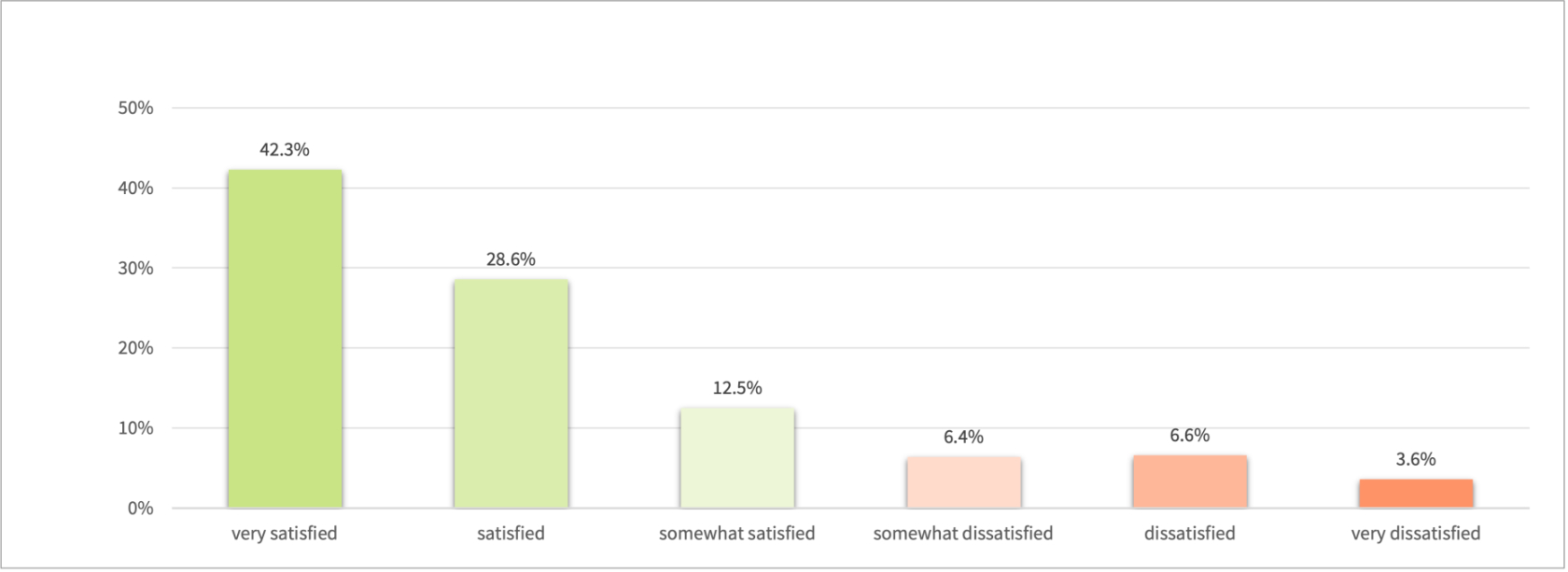
Only a few employees at Graduate Campus are authorized to access the survey’s raw data, and the information isn’t shared with anyone else. The results are provided to the faculty deans exclusively in the form of aggregated reports for each of the available levels of analysis. “This allows individual feedback to contribute to institutional learning over the long term,” says Elisabeth Stark, Vice President Research at UZH. “Recurring complaints about gaps in supervisors’ skills or critical feedback about specific organizational units can point to a need for action, allowing issues to be addressed at an early stage. Fortunately, the vast majority of the feedback we’ve received so far has been positive: in 2025, 71 percent of respondents were either very satisfied or satisfied with their supervision.”
Satisfaction levels with principal supervisor
Last year, 906 PhD candidates responded to the question: “How satisfied are you overall with the supervision provided by your main supervisor?” The graph shows the full distribution of their responses.
Clear guidelines for employment
In addition to monitoring doctoral supervision, UZH is also addressing issues related to PhD candidates’ employment conditions. In 2024, it introduced a new university-wide model with clear guidelines for doctoral candidates and assistants in junior academic positions. These guidelines include fixed employment levels, mandatory protected research time and transparent rules on the personal contribution expected of PhD candidates.
Following discussions with early-career researchers, the rules on this personal contribution were clarified and its scope more precisely defined. Rather than “at least 20 percent”, doctoral agreements now specify exactly 20 percent of a full-time position. It is also expressly stated that this contribution does not count as working time and is not subject to time-recording or documentation requirements.
Expanding continuing education for supervisors
Continuing education opportunities for supervisors and leaders have also been expanded. Graduate Campus, for example, offers a course called Professionals in Supervision for professors with supervision responsibilities. The course From Researcher to Mentor: Supervision Skills for Postdocs is aimed at postdoctoral researchers who help supervise PhD candidates. Moreover, the UZH Leadership and Governance Academy runs continuing education courses as well as personalized coaching and consulting on leadership and management issues.