Prague Rediscovered

For Julia Keller, Prague had always been simply the city where her aunt lives. A student of Slavic languages and literature at UZH, she has visited the Czech capital regularly since childhood. Her mother is from Czechia, so Keller is bilingual and familiar with the country’s culture. In recent years, however, her view of Prague and Czechia has broadened further. As part of her Bachelor’s degree, she took several modules that placed a special focus on the city. Their common theme: Cities of Exile – Zurich and Prague.
Tomáš Glanc, a professor in UZH’s Department for Slavic and Eastern European Studies, developed the courses with teaching staff at Charles University. Born in Prague, Glanc studied at Charles University and later headed its Institute of Slavonic and East European Studies. Since joining UZH in 2014, he has maintained close contact with his former university. The Slavic studies departments in Zurich and Prague have collaborated regularly, including through exchanges of guest lecturers and joint research projects.
But Slavic studies is not the only area of cooperation. In 2017, UZH signed a strategic partnership with Charles University, seeking to expand collaboration into other disciplines and promote student exchange.
When people and books cross borders
Prague has a long tradition of scholarship in both Slavic and Czech studies – the academic study of the Czech language, literature and culture – and is home to important libraries and archives. For Charles University, Zurich is a similarly interesting location, particularly when it comes to subjects like exile, migration and multilingualism. While the two cities share experience in these areas, their experience differs – which leads to new perspectives.
Both have long served as destinations for migrants from East and West. Russians, for example, emigrated to Prague, while Prague became a departure point for several waves of political emigration to Switzerland and on to Zurich. These included the migrations following the Communist takeover in 1948 and, later, the suppression of the Prague Spring in 1968.
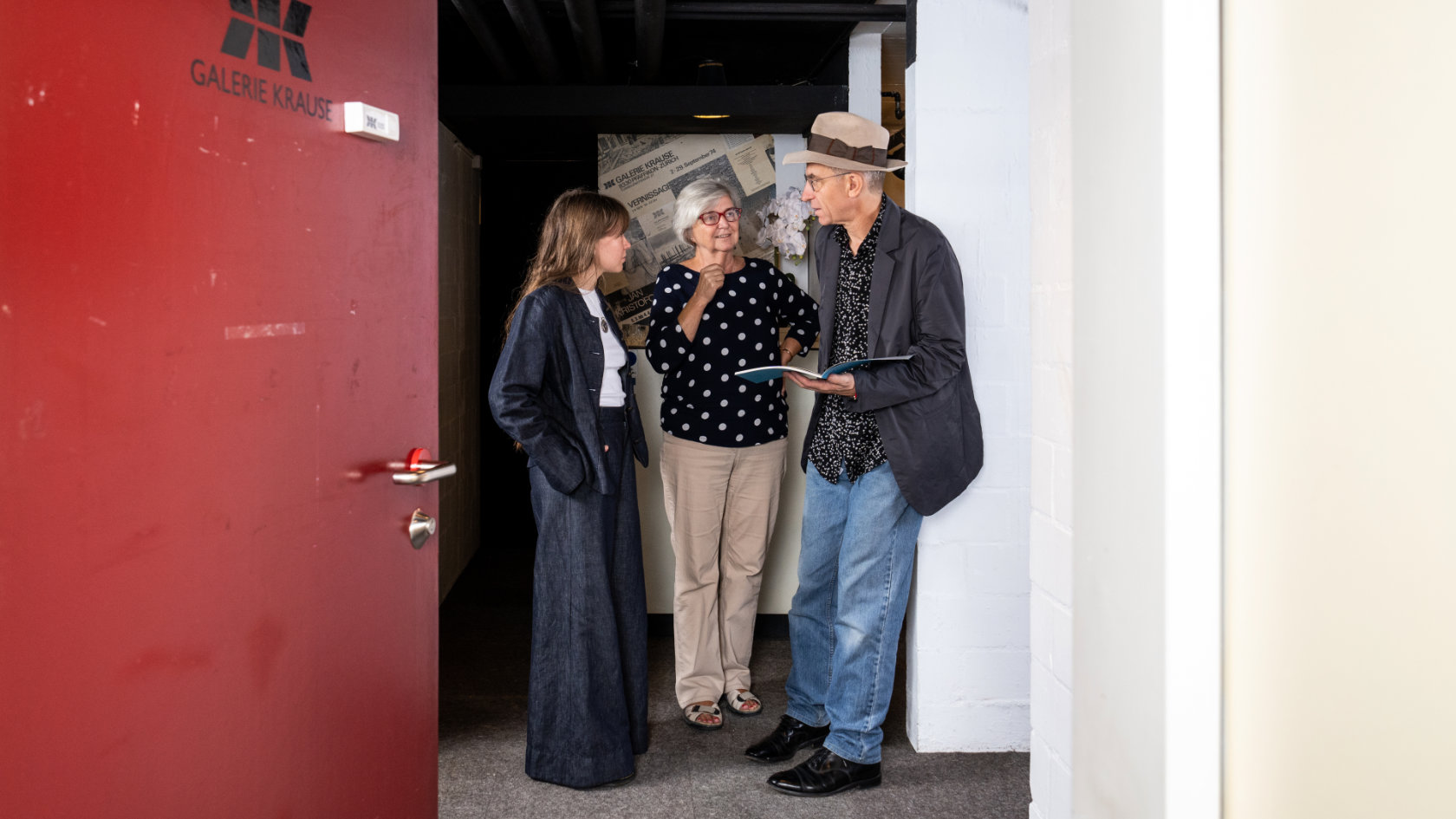
In Zurich, these emigrants established not only a Czech exile community but also Czech publishing houses that produced books in exile. Some of the books they printed were banned in communist countries and had to be secretly transported back to those countries along smugglers’ routes. But it wasn’t just books that traveled from West to East – during the 20th century, Swiss communists sometimes emigrated to what was then Czechoslovakia or the Soviet Union.
Greater collaboration
“For UZH and Charles University, it makes particular sense to work together on topics that offer research potential for both universities while also creating courses and events that go beyond the standard curriculum,” Glanc says.
The Slavic studies departments in Zurich and Prague have already been collaborating for several years through joint workshops on topics such as exile and migration. To deepen this work and develop related courses for students, Glanc sought support from the UZH Teaching Fund and in 2023 launched the three-year Cities of Exile pilot project. With three Zoom-based courses and two field trips on offer, around 50 UZH students took part in one or more of the events – joined of course by their peers from Charles University.

I learned how closely historical, political, linguistic, and cultural aspects are intertwined.
For Keller, the modules offered a welcome opportunity to explore the history, culture and politics of Central and Eastern Europe in greater depth. “Before that, my studies had focused mainly on the linguistics of Slavic languages. I’m also interested in topics such as migration and exile literature, but they’d previously only played a marginal role in my studies.” The new program now gave her a chance to find out more about how political history can shape languages and cultural memory.
Turning connections into opportunities
The mix of online courses and field trips was intentional. “The two formats have their own particular strengths and complement each other well,” Glanc says. The online format made it possible to bring in leading experts from around the world. Because of the international line-up, the courses were taught in English, creating the added advantage that exchange students at either university could participate without needing to speak Czech or German.
The field trips, meanwhile, gave students unique opportunities to meet researchers, civil society actors and fellow students from Prague in person. This was all made possible thanks to Glanc’s local connections – and included meetings with the director of Prague’s National Film Archive as well as heads of libraries, archives and cultural institutions.
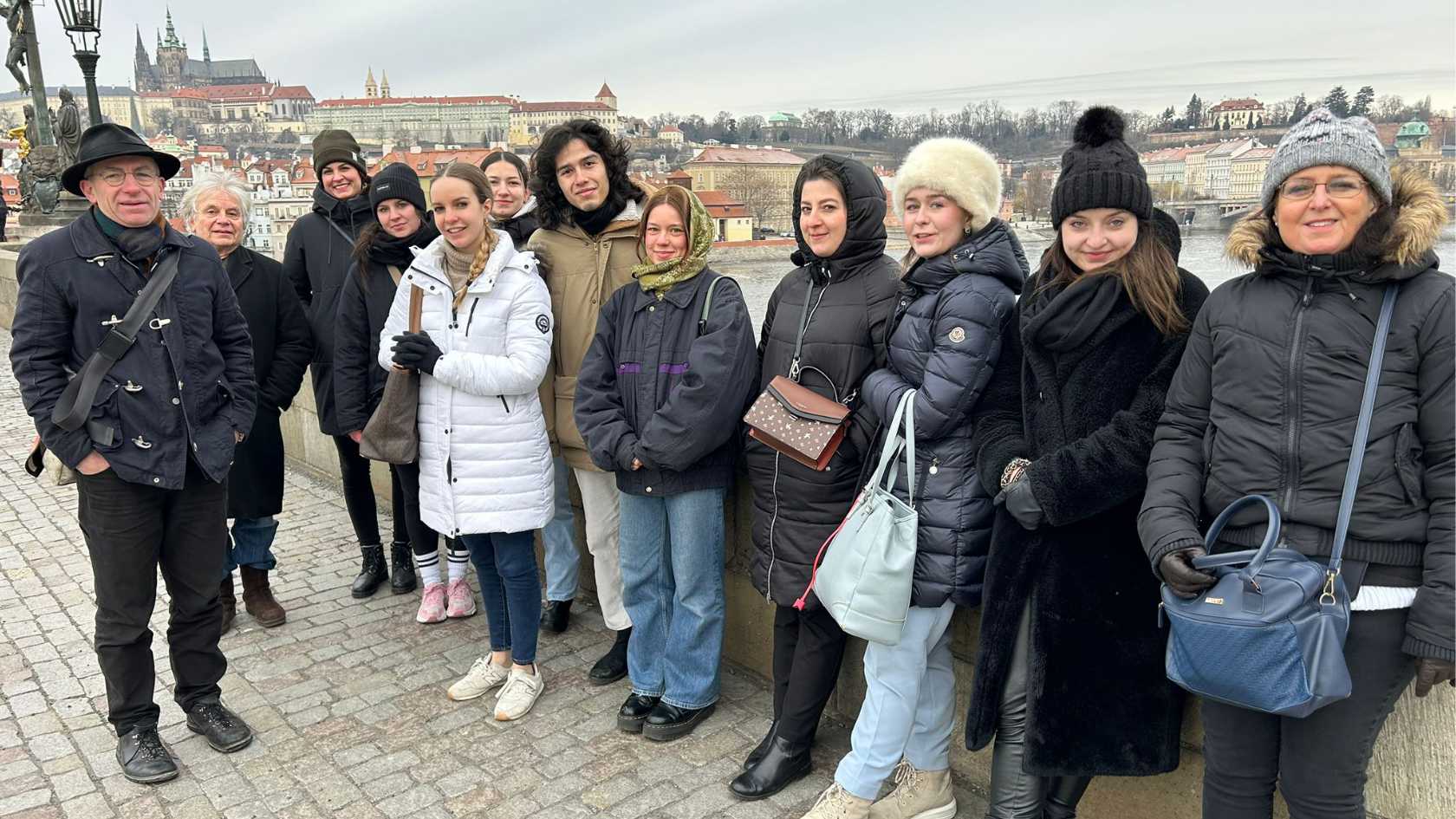
“It was the kind of insight that wouldn’t have been possible outside these modules,” Keller says. “What I found particularly valuable was hearing such different perspectives from so many different people.”
One experience stood out in particular: a visit to the human rights organization Memorial. The organization researches and documents state repression and political persecution inflicted during the Soviet era. Staff members – including exiles from the organization, which is banned in Russia – showed the students a book they’re working on about women in the gulags, Stalin’s forced-labor camps. “The book introduces the women through personal objects such as pieces of clothing and then tells their stories. That was very moving because it’s such a different way of preserving someone’s memory than simply recounting their biography,” Keller says.
During the field trips, students documented their impressions and conversations in notes and later turned them into written reports. “Writing about the experiences afterward made it even clearer how closely historical and political aspects are intertwined with language and culture,” Keller says.
A building block in the strategic partnership
The Cities of Exile pilot project has now come to an end. “The goal of deepening collaboration between the two universities has been achieved,” Glanc says.

The goal of deepening collaboration between the University of Zurich and Charles University in Prague has been achieved.
The plan now is to offer joint courses on a regular basis, covering a range of topics. The blended format – combining online classes with field trips – will become an additional element of international collaboration for the department – and another building block in the strategic partnership between the two universities.
Internationality in Studies
There are a growing number of ways for students to gain international experience as part of their degree program at UZH. The most important opportunities include:
- Physical mobility programs such as exchange semesters, research stays and short programs (summer/winter schools, BIPs, etc.). They allow students to get to know international higher education and research cultures and to strengthen their intercultural skills. The Global Student Experience office provides comprehensive advice and support to students planning and organizing a stay abroad.
- Virtual and hybrid exchange formats: Online formats such as Cooperative Online International Learning (COIL) provide students with intercultural experiences and insights into different perspectives via the digital or hybrid space. Some COIL-based courses also include a short in-person phase at a partner university. On-site courses can also provide international experiences, for example, by connecting digitally with experts from abroad, or by working on case studies from other cultural contexts.
- Joint and double degree programs: Programs such as the Una Europa Joint Bachelor of Arts in European Studies (BAES) and the Bachelor in Sustainability (BASUS) allow for structured international studies with a degree awarded jointly by several universities.
Supporting for Teaching Staff
UZH supports committed instructors in developing new teaching formats to promote intercultural experiences among students. Depending on the course format, different sources of funding are available for this purpose:
- University Teaching Fund “global_innovation” (ULF): The global_innovation funding line of the UZH Teaching Fund supports the implementation of projects that allow students to gain experience in internationalization at the module level. The program_innovationfunding line makes corresponding collaborations at the study program level possible. Depending on the course format, funding from the ULF open_innovation line may also be available.
- Global Funding Scheme: The UZH Global Funding Scheme supports faculties, departments, and professional service units in developing and implementing joint initiatives with international partners
- Promoting BIP through SEMP: The Blended Intensive Programme (BIP) is a format that allows students and staff to gain international experience through cooperative teaching and learning exchanges. They are made possible by teaching partnerships within a consortium of several European universities. Since the Fall Semester of 2025, BIP funding can be combined with funding from the ULF global_innovation line. BIP funding can be requested through the Global Student Experience office.
- Continuing education: UZH offers didactica courses on the topic of internationalization in teaching; useful suggestions and tools can be found on the Teaching Tools platform.
- Exchanges between peers: UZH encourages members of the teaching staff to discuss their experiences. For example, the UZH Teaching Day, Wednesday 28 October 2026) will be dedicated to the topic of internationality in teaching.