The Biology of Our Thoughts
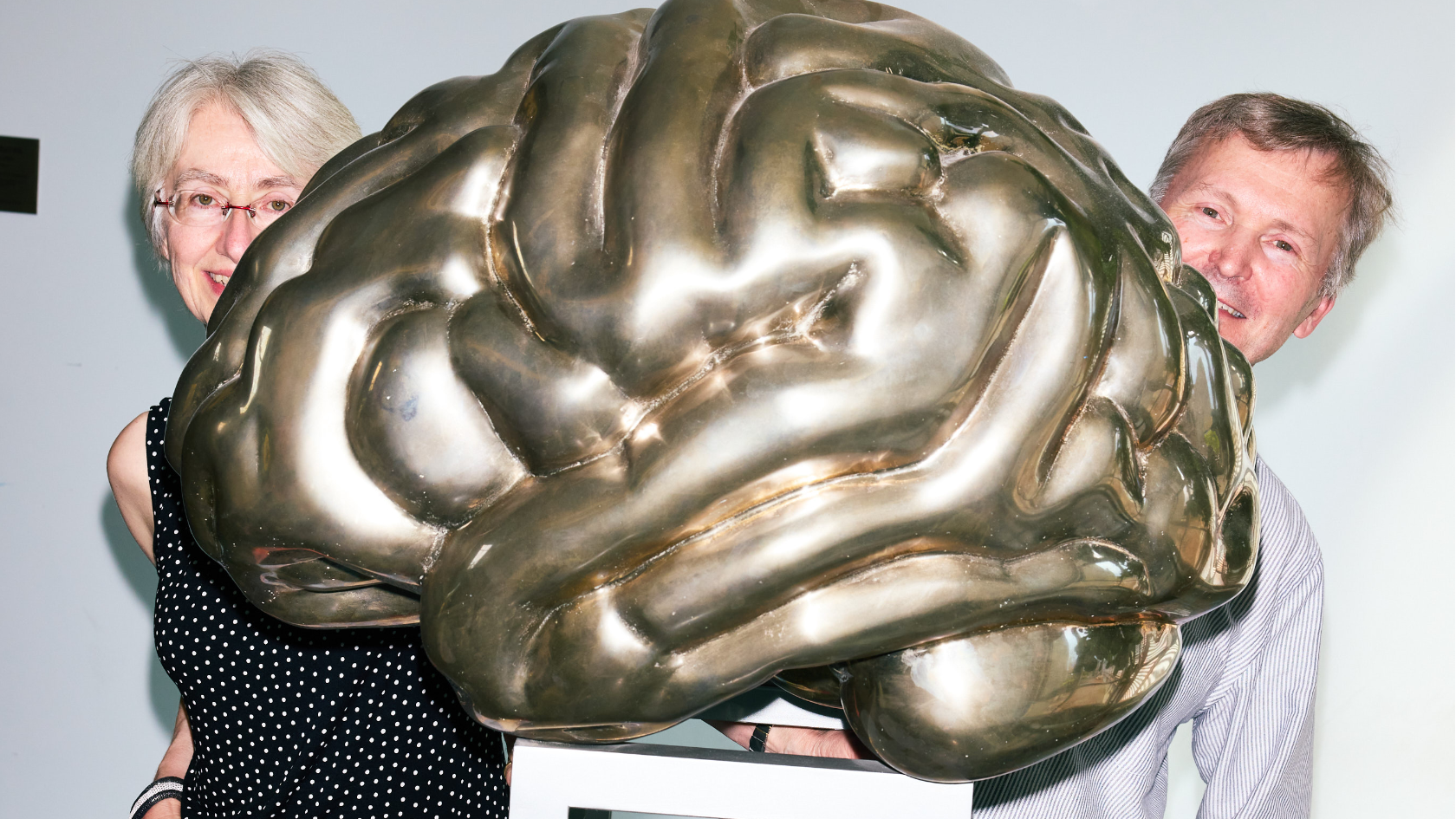
Our brain is a marvel of evolution. It governs our body and our perception, and it enables our thoughts – such as the one that our brain is a marvel of evolution. “Our brain, that’s us,” says neurobiologist Esther Stoeckli. “It dictates who we are – our consciousness and our I.” This is made possible by the interaction of 86 billion nerve cells, or neurons, in our head. Together with brain researcher Fritjof Helmchen and the many other UZH research groups participating in the University Research Priority Program (URPP) Adaptive Brain Circuits in Development and Learning, Esther Stoeckli is investigating how neuronal circuits develop in the brain and how these cellular networks enable behavior and learning.
It is astonishing what neuronal networks can achieve. “The brain, far more than any other organ in our body, is greater than the sum of its individual parts,” say Stoeckli and Helmchen. In a muscle, for instance, every cell does more or less the same thing – it contracts and thereby moves a leg or an arm. With the brain, it’s a very different story. “If I were to examine each single one of a hundred cells and understand what they do, I still wouldn’t have any idea what the brain does. It is only the interplay of the many neurons that actually leads to a brain function,” says Esther Stoeckli.
And this interplay – as well as the functions of the nerve cells involved – is in constant flux. “Our brain is extremely dynamic and multidimensional, which is incredibly fascinating,” says brain researcher Fritjof Helmchen. “In their exchange with the environment, the neuronal networks continuously modify themselves and adapt their dynamic processes.” This flexibility and complexity is what makes it so difficult to uncover the secrets of our brain. And it’s also why the EU’s Human Brain Project, which was launched with great fanfare in 2013 and ran until 2023, fell far short of expectations. It had set itself the bold aim of replicating the entire human brain in a simulation. “This aim was far too ambitious, it was utterly unachievable,” says Helmchen. “We are still far from being able to simulate the brain activity of even small animals, let alone that of humans.” But scientists have now managed to reconstruct the complete network of neurons with all their connections, known as the connectome, for the brain of a fruit fly.
Communicating cells
Even though many expectations were not met, neurosciences have significantly progressed, and we have a much better understanding of how our brain works. The first steps in modern brain research were made around 150 years ago by researchers such as the Spanish physician and anatomist Santiago Ramón y Cajal and his Italian colleague Camillo Golgi. Using a method developed by Golgi, Ramón y Cajal was able to stain individual cells as well as entire cell clusters and make them visible. This enabled him to show that the brain consists of nerve cells which communicate with each other. “That was a big first step,” says Fritjof Helmchen.

The brain dictates who we are – our consciousness and our I.
For their breakthrough findings, Ramón y Cajal and Golgi were awarded the Nobel Prize for Physiology or Medicine in 1906. Since then, imaging processes in brain research have been revolutionized. Today’s technologies allow the three-dimensional and dynamic examination of brain networks – and they enable us to watch the brain as it works. “Without imaging processes brain research impossible,” says Esther Stoeckli. Nor is it possible without animal testing. To be better understood, the brain has to be studied in all its complexity. That can’t be done in a culture dish in the lab or with the help of computer simulations.
In terms of developing imaging processes for brain research, Fritjof Helmchen and his colleagues are among the leading research groups worldwide. Their successes include the light-sheet microscope mesoSPIM. This allows researchers to create a three-dimensional, high-resolution anatomical image of the brain of a laboratory animal – right down to the level of individual neurons and their connection points, the synapses. Human brain tissue samples can be examined in a similar way.
Advanced microscopy techniques
Using a range of highly advanced microscopy techniques, Helmchen furthermore investigates the activity patterns in the brains of mice. The results also allow conclusions to be drawn regarding humans, as the brains of mice and humans have evolved over millions of years and in essence function similarly, even though the latter is far more complex. “We were able to examine excitation patterns in mice 20 years ago, but only in small cell clusters. Thanks to technological advances, we can now do it in networks of ten to hundred-thousand neurons,” Helmchen explains. That is a giant leap forward, but still only covers a mere fraction of a mouse’s brain, which consists of around 75 to 100 million nerve cells.
The aim of Helmchen’s research is to crack the code of such neuronal excitation patterns and to access the information that is being processed. “In the best case, measurable activity patterns would allow us to deduce and predict how an animal will behave,” says Helmchen. This has already been achieved at a rudimentary level in experiments in his lab at UZH. According to the brain researcher it was a small step towards mind reading.
How neurons find their way
The question of what a thought is and what goes on in our head when we think fascinated Esther Stoeckli even as a young woman. “That’s what led me into neurobiology almost 50 years ago,” she now says. “If we want to understand the software of our brain, we first have to understand the hardware.” Stoeckli’s research takes a step back from the process explored by her colleague Helmchen. Rather than analyzing the excitation patterns of neuronal networks, she examines how these networks developed in the first place and what might go wrong in this development. She does this by studying chicken embryos.
To become part of a brain network, a neuron first has to realize what type of nerve cell it is, so it can find the right partner cell with which to exchange information and therefore create a synapse. Stoeckli investigates how this happens. “Sometimes possible partner cells are far away, which means that an axon – a projection of a nerve cell – has to bore a way through the tissue in order to find its target,” the researcher explains. In the course of her career, Esther Stoeckli has identified several signal molecules which support neurons in finding their way and becoming connected.
But if this path-finding goes awry, nerve cells can also become wrongly connected. This is the case with many developmental disorders such as autism spectrum disorder and with mental deficiencies. Some molecules involved in building neuronal networks are also being linked to neurodegenerative diseases – for instance the amyloid precursor protein (APP) with respect to Alzheimer dementia. “We suspect that the seed for neurodegenerative disease may already be sown during the development of the nervous system,” says Stoeckli. If this development doesn’t occur in an ideal manner, the brain is subsequently less well connected. One consequence of this could be that neurodegenerative diseases and disorders thus become more readily noticeable when nerve cells and synapses degrade in large numbers. This is because the cognitive reserve, as it is termed, is smaller in a less well networked brain, meaning the brain is less protected. “This theory has found fairly general acceptance in neurobiology, as there is more and more evidence for it,” says Stoeckli.
Scientific journeys of discovery
Esther Stoeckli and Fritjof Helmchen conduct basic research. Stoeckli is convinced that advances in the clinical field are only possible if one has a good understanding of the bigger picture. “I can’t fix a television if I only have individual parts in front of me and don’t understand how the whole thing hangs together,” the neurobiologist comments. For her colleague Fritjof Helmchen, basic research is also a journey of discovery. “We sometimes conduct discovery research that is entirely open to the unknown, meaning it’s not clear at the start what objective we will achieve,” he says. The public largely perceives scientific scholarship as a form of research that formulates and tests hypotheses. Helmchen agrees that this is an important mode of scientific practice, but argues that discovery science is equally important, as it paves the way to creative hypotheses and truly new insights. “The CRISPR/Cas gene scissors for instance – a tool that is widely used today and has and will have enormous implications – arose from such discovery research,” the brain researcher points out.

In basic research, we need a certain amount of freedom, otherwise this kind of research is dead.
Embarking on scientific journeys of discovery is becoming increasingly difficult in Switzerland, and especially in the canton of Zurich, Esther Stoeckli and Fritjof Helmchen agree. Obtaining permissions for animal testing, for instance, is far more challenging. “The procedure is becoming increasingly complex and restrictive, with each individual experiment requiring an exact protocol and intensely detailed description in advance,” says Helmchen. “But in basic research, we can’t always precisely predict which test we are going to conduct and according to which protocol – we need a certain amount of freedom, otherwise this kind of research is dead.” Helmchen and Stoeckli believe one solution to this problem would lie in a catalog of accepted and proven experimental techniques which take animal welfare into consideration but provide a certain amount of leeway in how they are applied.
Formative childhood
Esther Stoeckli and Fritjof Helmchen embarked on their respective journeys of discovery several decades ago. The fascination for their topic has remained, as have the big open questions on how thoughts and consciousness arise in the brain. With their research, the two scientists have contributed to bringing us a tiny bit closer to the answer. But what have Stoeckli and Helmchen learned about us humans over the years?
“I came to understand how formative our childhood experiences are in terms of how we use our brain later,” says Esther Stoeckli. “I will always be grateful to my parents for permitting and encouraging my curiosity, and for passing on their tenacity, which has enabled me to carry on asking questions to this day.” “My impression is ambivalent,” Fritjof Helmchen replies. “On the one hand, the creativity of the human brain is fascinating, on the other hand the power of this creativity is having an increasingly marked effect on our planet. There is also something alarming in this.” Put that way, this marvel of evolution does indeed have two sides – a brighter and a darker one.