More Pay for Male AI Assistants

AI assistants are increasingly framed as digital coworkers rather than tools. In immersive settings such as VR, AI embodiment design choices can become salient social signals.
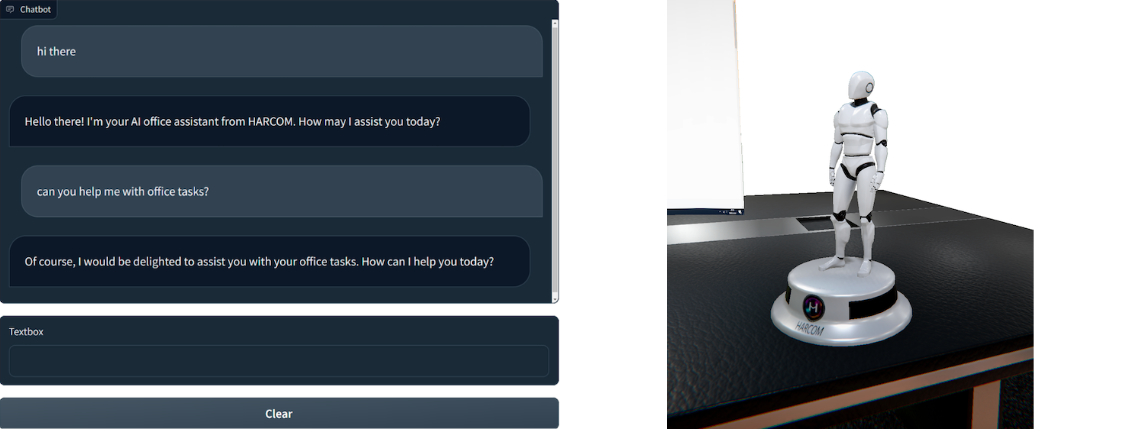
Researchers from the UZH Departments of Informatics and Business Administration investigated how such design decisions influence the way users perceive and behave towards AI agents. They employed functionally identical AI assistants varying in human likeness and gender presentation: a text-based chatbot, a desk robot, and human-like assistants: male-presenting Johan and female-presenting Johanna.
In a controlled study, 189 participants completed work tasks with these assistants, rated them, and allocated monetary rewards. The study authors also interviewed 34 participants after the experiment. The results show differences in reward allocation. We spoke to co-author Thomas Fritz to find out more.
“We have long been humanizing digital assistants”
UZH News: Which study result did you find particularly surprising?
Thomas Fritz: I found it surprising that AI assistants presenting as male were perceived as more human and received higher rewards than female ones, although they were technically identical. The only thing that was different was their representation.
The discrepancy between attitude and behavior is also striking. Most of the participants interviewed said that gender didn’t matter to them. But how they actually behaved in the study shows a different picture.
How do you interpret this finding?
We can’t conclusively say what causes this discrepancy. But we suspect a sort of metacognitive blind spot is at play, in other words a bias that people themselves aren’t even aware of. On the one hand, they profess to believe that gender shouldn’t matter. On the other, they underestimate how strongly social signals can influence their perceptions and behavior.
It’s worth pointing out that this was a “between study”: Half of the participants worked with the male-presenting Johan, and the other half with the female-presenting Johanna. So individual participants couldn't compare the two directly.
Did the ratings of male and female study participants differ?
The basic trend was evident in both sexes. However, it was more marked in the male participants, who tended to perceive the female assistant as less human and allocated her smaller rewards than the female study participants did.
What recommendations for the design of AI assistants can be drawn from the study?
Our results highlight a link – that the more an assistant is perceived as human, the more trust participants place in it, and the more they reward it. The difference between an assistant that is clearly identifiable as a robot and a human-like avatar was clear.
So human-like design can have advantages. At the same time, there’s a risk that we place too much trust in an assistant like that and forget that it is an AI. The extent to which an assistant should be designed to be human-like depends on its intended purpose.

Our results highlight a link – that the more an assistant is perceived as human, the more trust participants place in it, and the more they reward it.
Is it even ethical to “humanize” AI assistants although they’re not human?
We have long been humanizing digital assistants, for example with names and voices, like Siri or Alexa. With avatars in a VR setting, this impact becomes even greater.
It becomes an issue if it results in false expectations. For this reason, it must always be transparent when users are interacting with an AI. We also need to be careful not to reinforce existing gender stereotypes.
One example is names: Siri and Alexa are female names and have mainly been used for simple everyday tasks. On the other hand, newer models can carry out much more complex tasks – and in Claude, one of these models has a male name.

Are there any other aspects of the study you found particularly striking?
It’s impressive how quickly the technology is developing. When we started the study, we first had to convert the voice to text, send it to ChatGPT and then translate the answer back to voice. This resulted in delays of several seconds.
Now, AI systems can have conversations practically in real time. They can listen, speak and even interrupt us. As a result, communication with AI assistants is increasingly natural and will probably play a bigger role in the workplace going forward.
The study was the result of an interdisciplinary collaboration. How was that experience?
We worked with researchers from the Department of Business Administration on the study. I found working across different disciplines really fascinating. We all brought different approaches to conducting studies and analyzing data, which was very rewarding.